
Leptosphaerulina crassiasca
Leptosphaerulina crassiasca
Leptosphaerulina crassiasca is a fungal pathogen classified within the Ascomycota phylum. It functions as an opportunistic parasite, primarily targeting legumes, and possesses a significant capacity for saprophytic survival.
What the section contains
Leptosphaerulina crassiasca
The fungus is characterized by the production of pseudothecia, which are embedded within the host tissue. These structures contain thick-walled asci that release ascospores under favorable environmental conditions.
The pathogen is highly adaptable to various climatic zones, making it a widespread problem in agricultural regions where alfalfa and related forage crops are cultivated.
Due to its microscopic size, the fungus is often identified through a combination of symptomatic observation and laboratory confirmation of its characteristic fruiting bodies.
Its mycelium penetrates host cells, secreting enzymes that lead to the degradation of plant tissue, facilitating the expansion of necrotic lesions across the foliage.
This pathogen is most noted for causing significant leaf spot diseases in alfalfa, leading to substantial reductions in the yield and nutritional quality of the forage.
Besides alfalfa, it affects several other legume species, including clover and birdsfoot trefoil, often impacting the productivity of permanent pastures and hay fields.
Heavy infections lead to premature defoliation, which severely reduces the biomass available for harvesting and diminishes the overall protein content of the crop.
In cases of severe outbreaks, the pathogen can weaken the root system indirectly by reducing the plant's photosynthetic capacity, resulting in less vigorous regrowth after cutting.
Crop losses attributed to this fungus can range from 10% to 30%, depending on the duration of high-humidity periods and the susceptibility of the specific cultivar being grown.
Disease development is highly favored by cool to moderate temperatures and high humidity, conditions often observed during spring and autumn or throughout wet summers.
The pathogen persists in the field through crop residues and soil-borne structures, which serve as the primary inoculum at the beginning of the growing season.
Ascospore release is frequently triggered by rainfall and high-moisture events, allowing the spores to be splashed onto nearby healthy foliage and spread the infection.
During dry, hot summer spells, the pathogen may become quiescent within the host tissue, but it remains capable of rapid reactivation once moisture levels rise again.
The fungus undergoes a survival phase during winter, maintaining its viability in dead plant debris until conditions improve for renewed growth in the following year.
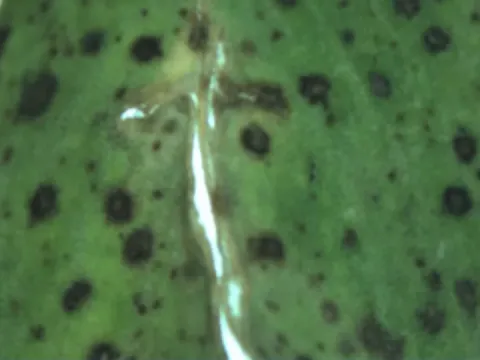
Initial infection symptoms appear as minute yellow or light brown spots on leaves, which gradually expand and develop a darker brown or tan margin.
A diagnostic feature is the appearance of tiny, black specks within the necrotic lesions; these are the fruiting bodies (pseudothecia) of the fungus, clearly visible upon close inspection.
Severe infections often lead to widespread chlorosis and curling of the leaves, which can cause the foliage to wither and drop prematurely from the stems.
Stems may also show elongated lesions, although this is generally less common than the leaf symptoms, the lesions can cause weakening and secondary damage.
When multiple lesions merge, the entire leaf blade may turn necrotic, giving the field an overall blighted appearance during the peak infection stage.
The most effective management strategy involves crop rotation, which breaks the infection cycle by removing the host plant for a period of several years.
Proper harvest management, such as cutting the crop before it becomes over-mature, significantly reduces the amount of pathogen inoculum present in the field.
Utilizing resistant or tolerant cultivars is a crucial component of an integrated pest management program to minimize the reliance on chemical treatments.
Sanitation practices, including the removal of crop debris or incorporation of stubble into the soil, help reduce the overwintering survival of the fungus.
Optimizing plant nutrition, particularly ensuring adequate potassium levels, helps maintain plant vigor and enhances natural defense mechanisms against fungal attacks.