
Leptosphaerulina leaf spot
Leptosphaerulina briosiana
Leptosphaerulina briosiana is an ascomycete fungus and a significant plant pathogen that primarily targets alfalfa (Medicago sativa) and related forage legumes.
What the section contains
Leptosphaerulina leaf spot
Taxonomically, it belongs to the order Pleosporales. The fungus is known for its ability to produce pseudothecia, which act as the primary overwintering structures.
The life cycle involves the production of ascospores that are forcibly discharged into the air, allowing the pathogen to spread across fields during periods of high humidity.
Under favorable environmental conditions, the fungus aggressively colonizes host tissues, utilizing specialized enzymes to break down plant cell walls.
Its microscopic structure and reproductive strategy make it a highly resilient pathogen, capable of surviving in debris for extended periods until suitable conditions arise.
The primary host for this pathogen is alfalfa, where it causes a disease commonly known as Leptosphaerulina leaf spot or pepper spot.
The infection attacks the foliage, causing small lesions that eventually lead to chlorosis and premature defoliation of the crop.
Significant economic losses occur because the disease reduces the total biomass yield and drastically lowers the nutritional quality of the forage.
In addition to yield loss, severe infections can weaken the plant stands, making them more susceptible to other biotic and abiotic stresses during the winter months.
The cumulative effect of repeated infections over the growing season significantly reduces the productive lifespan of alfalfa fields.
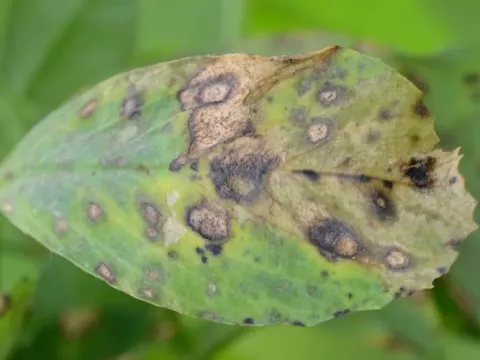
Initial symptoms include the appearance of very small, dark, irregular spots on the leaflets, often referred to as "pepper spots" due to their size and appearance.
As the disease progresses, these lesions enlarge and often develop a light-colored center surrounded by a darker, necrotic border.
The presence of minute black structures (pseudothecia) in the center of the spots is a diagnostic characteristic of this specific fungal infection.
In wet weather, these lesions can coalesce, resulting in large areas of dead tissue that lead to yellowing and subsequent dropping of the leaves.
Symptoms are most visible on the lower leaves of the canopy where humidity remains higher, creating an ideal microclimate for the pathogen's growth.
Integrated disease management involves selecting alfalfa cultivars that exhibit tolerance or resistance to leaf spot diseases.
Effective crop rotation practices help to minimize the buildup of fungal spores in the soil and on crop debris from previous seasons.
Early harvesting of the forage crop is a critical cultural practice that helps remove the infected foliage before the fungus can further spread.
Sanitation measures, such as the removal of plant residues, are recommended to reduce the primary inoculum load for the subsequent growing season.
Chemical control options are generally reserved for severe outbreaks, utilizing approved fungicides to protect the crop during critical growth stages.