
Lettuce chlorosis virus
Lettuce chlorosis
Description
How to identify
Lettuce chlorosis virus (LCV) is a plant-pathogenic virus belonging to the genus Crinivirus in the family Closteroviridae. It is a phloem-limited virus that is not transmitted mechanically, meaning it cannot be spread through simple contact or sap.
Transmission of the virus is carried out by whiteflies, specifically the greenhouse whitefly (Trialeurodes vaporariorum) and the tobacco whitefly (Bemisia tabaci). These insects transmit the virus in a semi-persistent manner, remaining infectious for several days after feeding on a host plant.
What it damages
The primary host for this pathogen is lettuce (Lactuca sativa). However, the virus also affects various weed species, particularly those in the Asteraceae family, which act as secondary reservoirs for the disease throughout the year.
Infection is most common in greenhouse environments where high densities of whiteflies can lead to rapid spread. The virus compromises the plant's ability to perform photosynthesis, leading to stunted development.
Signs of infestation
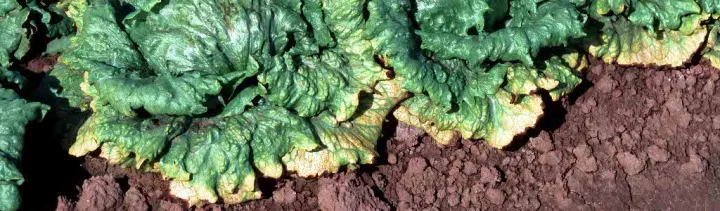
The characteristic symptoms of Lettuce chlorosis virus include interveinal chlorosis on the older and middle leaves. Over time, the affected leaves may become brittle, thick, and show signs of reddening or yellowing.
Infected plants typically fail to form marketable heads or exhibit significantly reduced weight. The overall vigor of the crop is severely depleted, making it highly susceptible to secondary infections or environmental stress.
Control measures
Integrated Pest Management (IPM) is essential for controlling LCV. This involves regular monitoring for whiteflies and the use of insect-proof screening on greenhouse openings to prevent the entry of vectors.
- Removal and destruction of infected crop debris.
- Control of weeds in and around the greenhouse.
- Use of biological control agents such as parasitic wasps against whiteflies.
- Application of selective insecticides when population thresholds are exceeded.
- Implementation of a fallow period to break the virus-vector cycle.
Causes diseases · 1
Discussion
No discussions yet — be the first.