
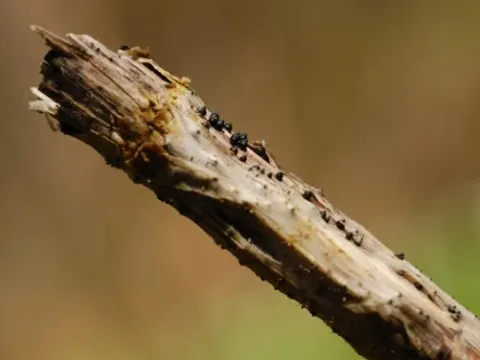
Leptosphaeria acuta
Leptosphaeria acuta
Leptosphaeria acuta is an ascomycete fungus belonging to the Leptosphaeriaceae family. While primarily known as a saprotroph, it frequently behaves as a pathogen on stressed or aging plant tissues.
What the section contains
Leptosphaeria acuta
The fungus is characterized by the production of perithecia — small, black, flask-shaped structures that appear on the stems of infected host plants. These structures are the primary sources of ascospores.
This pathogen demonstrates remarkable resilience in the environment, capable of surviving on crop residues throughout the winter months, serving as a primary source of inoculum for the next growing season.
Microscopically, the fungus produces slender, multi-septate ascospores which are ejected and dispersed by wind and rain, allowing for rapid spread across agricultural landscapes.
Taxonomically related to other significant plant pathogens, Leptosphaeria acuta requires careful identification to distinguish it from similar species that cause necrosis in various crops.
The pathogen has a wide host range, commonly infecting nettles but also impacting members of the Brassicaceae family, including oilseed rape and various mustards.
Infection typically targets stems and the root neck, leading to tissue necrosis. This impairs the plant's vascular system, hindering water and nutrient uptake, which eventually results in premature wilting.
Crops subjected to abiotic stress are particularly vulnerable, as the fungus quickly colonizes weakened stems, accelerating the decay process and damaging structural integrity.
Yield loss occurs through a combination of reduced seed weight, compromised grain quality, and increased lodging caused by weakened stems, which complicates harvesting operations.
Root system colonization can also occur, contributing to root rot complexes that reduce plant vigor and inhibit overall vegetative development in the early stages of growth.
The development of Leptosphaeria acuta is highly correlated with moisture availability, with peak activity occurring during wet and temperate periods throughout the growing season.
The lifecycle begins with the release of ascospores from overwintering perithecia, triggered by spring rainfall and warming temperatures, which initiates the primary infection cycle.
Secondary infections occur continuously throughout the summer if environmental conditions remain favorable, allowing the fungus to spread to adjacent plants and new growth.
Autumn marks the transition phase where the fungus colonizes senescing plant tissues, establishing the perithecia that will endure the dormant winter season.
The ability of the fungus to survive across various microclimates makes it a persistent threat that can emerge whenever conditions for moisture and host receptivity align.
Initial infection symptoms appear as small, indeterminate spots on the stems, which gradually enlarge and shift in color to shades of brown or grey as tissue necrosis progresses.
The defining visual indicator of Leptosphaeria acuta is the appearance of numerous small, black perithecia clustered on the surface of the stems, creating a characteristic rough texture.
Stems affected by the fungus often become brittle or exhibit longitudinal cracking, reflecting the internal decay that hampers nutrient transportation within the plant.
Under humid conditions, sparse fungal mycelium may be visible on the surface of the lesion, though diagnostic identification usually requires observing the characteristic black fruiting bodies.
Due to the frequent presence of co-infecting fungi, precise field diagnosis is challenging and often requires microscopic confirmation of the fungal reproductive structures.
Effective management begins with robust crop rotation practices that eliminate the presence of suitable host plants in the field for several years, thereby exhausting the fungal inoculum.
Deep tillage and careful incorporation of plant debris are crucial steps, as they facilitate the decomposition of host tissue and bury the perithecia, reducing the potential for ascospore release.
Fungicide application during the early vegetative growth stages can prevent initial infections and limit the spread of the pathogen, particularly in high-risk environments.
Weed management, specifically targeting wild Brassicaceae species near production areas, is essential to minimize the natural reservoirs of the fungus.
- Utilizing disease-resistant crop cultivars where available.
- Balanced nutrient management to enhance plant immune responses.
- Effective post-harvest residue removal to disrupt the pathogen lifecycle.