
Isariopsis clavispora
Isariopsis clavispora
Isariopsis clavispora is an anamorphic fungus classified as the causative agent of cercospora leaf spot in grapevines. It is also known in scientific literature by its synonym Pseudocercospora vitis.
What the section contains
Isariopsis clavispora
The fungus develops its mycelium within the leaf tissues, eventually emerging through the stomata to produce clusters of conidiophores. The conidia (spores) are characteristically club-shaped and olive-brown, which are used as primary identification markers.
The pathogen survives the winter season as mycelium or conidia within fallen leaves and infected plant debris. Primary infection occurs during the spring when temperatures begin to rise and moisture is sufficient for spore germination.
Environmental conditions play a crucial role, with optimal growth occurring at temperatures between 20°C and 28°C. High relative humidity and prolonged periods of leaf wetness significantly increase the rate of infection.
Spread of the disease across the vineyard is primarily facilitated by wind currents and water splashes from rain. Dense canopy management often exacerbates the issue by trapping moisture and preventing rapid leaf drying.
The primary host for Isariopsis clavispora is the cultivated grapevine (Vitis vinifera). The pathogen mainly affects foliage, leading to premature leaf senescence and overall plant decline.
Significant damage occurs through the reduction of the leaf's photosynthetic area, which impairs the plant's ability to accumulate sugar in berries. Severe defoliation weakens the vines, reducing their vigor and winter hardiness for the following year.
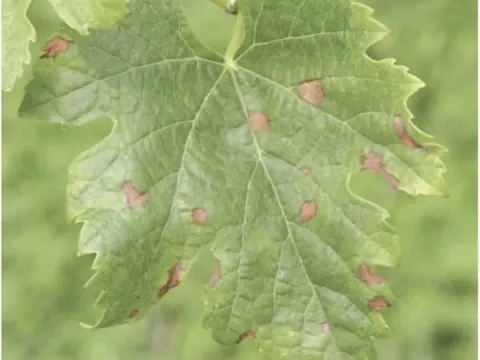
Initial signs include small, circular, or angular spots on the upper leaf surface, which start as light brown and darken over time. These spots often develop a darker, well-defined margin as the infection matures.
On the undersides of the leaves, a distinct olive-grey to brown velvety growth becomes visible. This mass consists of conidiophores and spores, confirming the diagnosis of Isariopsis infection.
As the disease progresses, individual spots may coalesce, covering large parts of the leaf blade. Eventually, the affected leaves may curl, become brittle, and drop prematurely, leading to significant foliage loss before harvest.
Integrated disease management begins with strict sanitation practices, such as removing and destroying fallen leaves to eliminate primary inoculum sources. Deep plowing can also bury debris to prevent spore release.
Improving vineyard aeration through proper canopy management, shoot thinning, and leaf removal is essential. Keeping the foliage dry for as long as possible is a major deterrent to fungal colonization.
- Use of copper-based fungicides for protective applications.
- Application of systemic fungicides like strobilurins or triazoles if necessary.
- Monitoring programs to identify early infection pockets before they spread.
Selecting disease-resistant cultivars can significantly reduce the need for chemical intervention. Consistent application of preventative measures helps maintain vine health and ensures consistent crop quality.