
Hendersonula toruloidea
Hendersonula toruloidea
Hendersonula toruloidea is a pathogenic fungus belonging to the phylum Ascomycota. It is a notorious plant pathogen known for infecting various tree species, particularly in warm and arid climates where thermal stress weakens host plants.
What the section contains
Hendersonula toruloidea
The fungus is primarily known for its role in causing bark necrosis and systemic dieback. It reproduces via conidia, which are efficiently dispersed through wind, rain splash, and insect vectors, facilitating rapid spread across orchards.
Once inside the plant tissue, the mycelium colonizes the cambium and xylem. It actively destroys host cells, leading to a significant disruption of the plant's vascular system and nutrient transport mechanisms.
This pathogen is highly resilient and capable of surviving in dead bark tissue and woody debris for extended periods. Its endurance makes it a persistent threat that requires rigorous sanitation and monitoring programs in orchards.
Laboratory identification often involves isolating the fungus on culture media, where it produces distinct colonies. Microscopic examination of the conidia is essential for a definitive diagnosis of the pathogen.
The fungus primarily targets stone fruit trees, almonds, and citrus, often resulting in severe economic losses. It causes the death of branches and can lead to the total collapse of the entire tree if the trunk becomes infected.
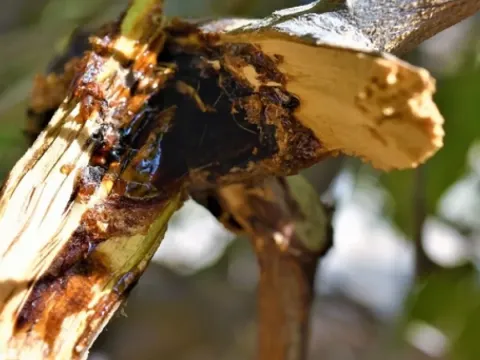
Bark necrosis is the most visible form of damage. Affected bark turns dark, dries out, and eventually peels off. This structural damage weakens the tree, making it susceptible to secondary infestations by wood-boring beetles.
Infection often leads to wilting and premature leaf drop. Because the vascular system is compromised, the tree cannot supply enough water or nutrients to its canopy, resulting in stunted growth and drastically reduced fruit yields.
For young trees, the infection is often fatal, especially if the fungus girdles the trunk. This type of damage creates a permanent blockage of nutrient flow, which is irreversible once the cambium is destroyed.
The pathogen is particularly devastating in orchards stressed by drought or high temperatures. Its ability to exploit physical wounds on the bark makes maintenance and care of the orchard crucial for disease prevention.
Symptoms typically begin as localized areas of bark discoloration, ranging from brown to black. In many cases, the bark cracks and exudes gum as the tree attempts to defend itself against the fungal invasion.
The most reliable sign of infection is the appearance of small, black pustules on the bark surface, which are the fungal pycnidia. Under high humidity, these pustules release masses of black, powdery spores.
Inside the infected branch, the wood shows distinct brownish or blackish staining. This internal decay is often accompanied by a softening of the wood tissue and a noticeable fungal odor.
Branches affected by the pathogen often show delayed budding or fail to leaf out entirely in the spring. Leaves on partially infected branches may wilt suddenly, giving the appearance of having been scorched by fire.
Visible edges between healthy and necrotic tissue are common. Over time, the dead sections of bark expand, creating large, sunken lesions that serve as active sites for continuous spore production.
The primary control strategy involves aggressive sanitation. All infected branches must be pruned well below the site of the lesion, ensuring that only healthy wood remains after the cut.
Strict disinfection of pruning tools is mandatory. Using alcohol or bleach solutions between cuts prevents the mechanical transmission of spores from infected trees to healthy ones during routine maintenance.
All removed plant material must be burned immediately. Never leave diseased wood in or near the orchard, as it continues to release spores into the environment for a significant amount of time.
Protective practices, such as painting trunks with white latex paint, help prevent sunscald. Sun-damaged bark is the primary entry point for Hendersonula toruloidea, so protecting the bark is a key preventive measure.
Chemical control includes applying copper-based fungicides during the dormant season. These treatments help reduce the surface inoculum load and protect wounded areas from new infections until the tree can recover.