
Heterosporium calandriniae leaf spot
Heterosporium calandriniae
Description
How to identify
Heterosporium calandriniae is a fungal pathogen belonging to the order Hyphomycetes. It is specifically known for infecting the foliage of Calandrinia species, often appearing in nursery settings or decorative landscapes with high humidity levels.
The fungus reproduces via conidia, which are small spores easily dispersed by wind and splashing water. These conidia are the primary inoculum for the spread of the disease across neighboring host plants.
Taxonomically, it is recognized as a mitosporic fungus that survives the dormant season as mycelium within infected plant debris. Its life cycle relies on recurring environmental conditions that favor fungal colonization.
Once the fungal spores land on a receptive host leaf, they germinate and penetrate the epidermis using specialized infection structures. This initiates the colonization of the host's intracellular spaces to extract nutrients.
Epidemiological development depends on the presence of free water on the leaf surface, typically lasting for more than 6-12 hours. High humidity and mild temperatures are ideal for the development of these fungal colonies.
What it damages
The primary impact of Heterosporium calandriniae is the degradation of the plant's aesthetic value. Since Calandrinia is often grown for its ornamental qualities, leaf spot symptoms significantly reduce its visual appeal.
The disease reduces the total photosynthetic area of the plant. As the spots expand and coalesce, large portions of the leaves become non-functional, leading to stunted growth and poor flower production.
In severe cases, the foliage becomes chlorotic and drops prematurely. This puts stress on the entire plant, making it more susceptible to secondary environmental stresses like drought or heat.
If the infection reaches the stem tissue, it can cause localized lesions that impede the transport of water and nutrients. This may result in the wilting of entire branches or the collapse of the plant structure.
The cumulative damage often results in the loss of economic value for commercial nurseries, as infected plants are typically unsellable and must be discarded to prevent further spread.
Signs of infestation
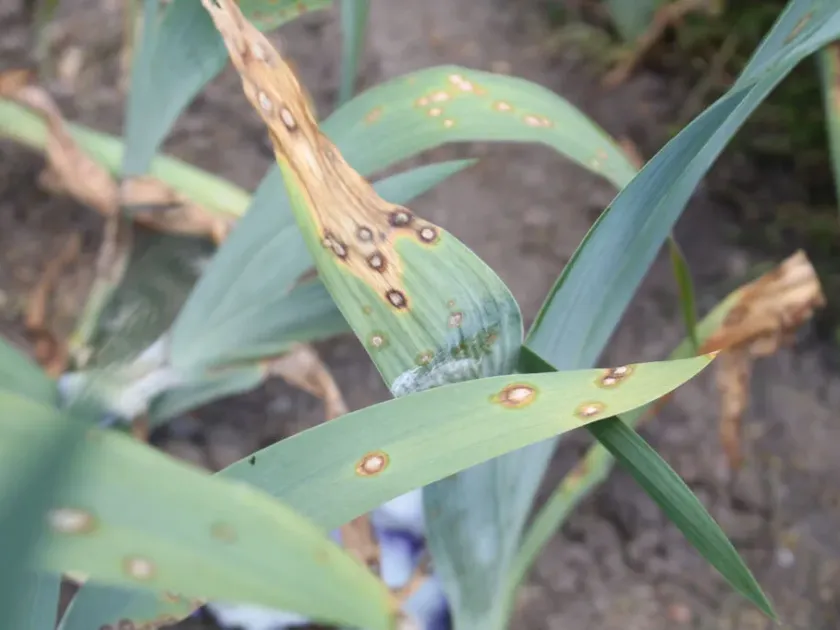
The symptoms begin as small, pale, or yellowish spots on the upper surface of the leaves. Over time, these spots darken and develop characteristic necrotic centers with defined borders.
A distinctive feature is the emergence of a dark, velvet-like fungal growth in the center of the spots, especially on the underside of the leaves. This is the result of active sporulation of the fungus.
As the disease progresses, the individual spots can enlarge and merge, resulting in irregular dead patches of tissue. This necrotic tissue often dries up and eventually crumbles, leaving holes in the foliage.
Yellowing (chlorosis) often develops around the necrotic lesions as the plant reacts to the infection. In advanced stages, the entire leaf may shrivel and die, starting from the base of the plant.
Observing the symptoms carefully reveals the presence of concentric zones in larger spots, indicating different phases of fungal growth. The disease usually moves from the lower foliage toward the top of the canopy.
Control measures
Sanitation is the most critical component of control. Removing all infected leaves and plant debris from the garden bed significantly reduces the amount of fungus present for the next season.
Improving air circulation around the plants helps to keep the foliage dry, which is essential for inhibiting the germination of fungal spores. Proper spacing during planting prevents the creation of a microclimate favorable for the fungus.
Chemical control involving fungicides may be necessary in high-pressure situations. Copper-based products or systemic triazole fungicides applied at regular intervals can effectively suppress the disease.
- Provide sufficient sunlight to reduce humidity.
- Avoid overhead irrigation; use drip irrigation instead.
- Monitor plants frequently for early detection of spot symptoms.
- Destroy infected plant material via burning or deep burial.
For sustainable management, biological controls such as Bacillus subtilis can be applied preventively. However, if symptoms are already widespread, chemical intervention remains the most reliable strategy to save the crop.
Causes diseases · 1
Discussion
No discussions yet — be the first.