
Heterosporiosis
Heterosporium proteus
Description
How to identify
Heterosporiosis, caused by the imperfect fungus Heterosporium proteus, is a common plant disease characterized by necrotic spots on foliage and stems. The pathogen belongs to the Fungi kingdom and is a well-known agent of leaf spot diseases.
The fungus develops mycelium within plant tissues, eventually emerging to form conidiophores on the surface. These structures produce characteristic spores that facilitate the spread of the pathogen within the crop canopy.
Morphologically, Heterosporium proteus is identified by its cylindrical, septate conidia. These spores are highly resistant to environmental stress, allowing the fungus to survive under unfavorable conditions.
The pathogen thrives as an obligate parasite but maintains a saprotrophic phase, enabling it to persist on dead plant debris in the field throughout the winter season.
Professional diagnosis often involves microscopic examination of the lesions, where the distinctive velvety appearance of the sporulation on the leaf surface confirms the presence of the pathogen.
What it damages
Heterosporium proteus infects a variety of ornamental plants, particularly irises, as well as some agricultural crops. The damage is primarily localized on the leaves, leading to severe defoliation.
As the infection progresses, the destruction of photosynthetic tissue reduces the plant's overall vigor. This leads to diminished growth, poor flower development, and lower yields in affected crops.
In addition to leaves, the fungus can infect flower stalks, causing them to twist or wither. This renders ornamental plants unsuitable for the market, causing significant economic losses for growers.
Severe infestations can lead to the systemic weakening of the plant, making it more susceptible to secondary infections by other opportunistic pathogens or pests.
The cumulative effect of tissue necrosis and the loss of green surface area can result in significant reduction of biomass, particularly when the disease appears during the critical stages of plant development.
When it appears
The development of heterosporiosis is heavily dependent on moisture. The disease usually flares up during periods of high humidity, frequent rainfall, or heavy dew, which facilitate spore germination.
Temperatures ranging from 18°C to 22°C are optimal for the growth of Heterosporium proteus. Such conditions frequently occur in late spring and throughout the summer months.
Greenhouse environments are particularly conducive to the pathogen if ventilation is inadequate, as the stable, humid microclimate allows for continuous infection cycles year-round.
During the autumn, the fungus prepares for survival by forming dormant structures in plant debris. This reservoir ensures the re-emergence of the disease in the following growing season.
Monitoring the weather is crucial for disease management. Sudden shifts to wet, cool conditions serve as a warning sign for growers to initiate protective measures before the fungus reaches epidemic proportions.
Signs of infestation
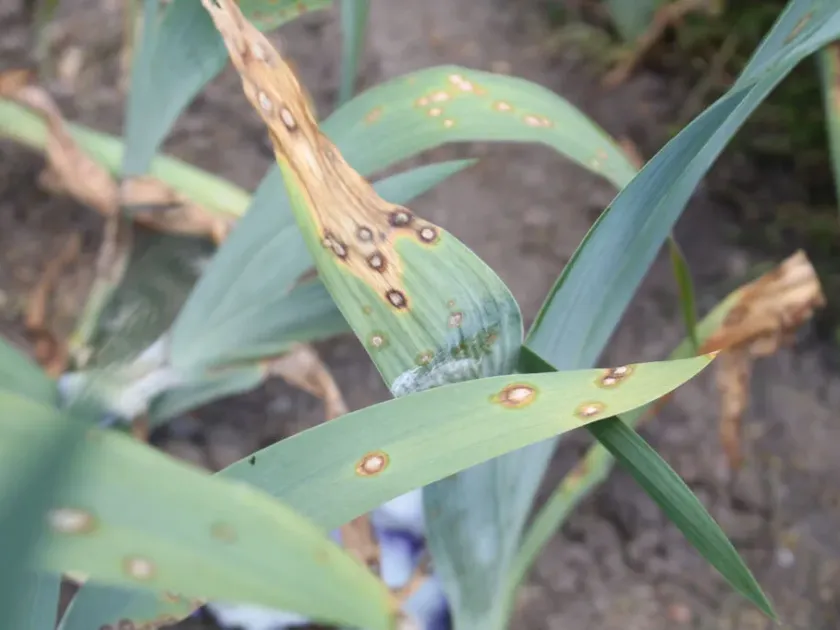
Initial symptoms consist of small, circular to elongated spots on leaves. These spots typically feature a light-colored center surrounded by a distinct dark brown or reddish margin.
As the lesion expands, the center of the spot may turn gray or necrotic. The distinct "eye-like" appearance of the lesions is a common visual marker for identifying this specific pathogen.
Under conditions of high humidity, the centers of these spots become covered in a dark, velvety layer of conidiophores and spores, which is diagnostic of the disease.
As the disease progresses, the lesions may coalesce, covering large areas of the leaf blade, which leads to premature yellowing, withering, and eventually, total tissue death.
- Appearance of small spots with dark margins
- Dark velvety sporulation on the leaf underside
- Twisting and distortion of stems and flower stalks
- Premature yellowing and drying of leaves
Control measures
Effective management requires a multi-pronged approach starting with sanitation. Removing and destroying infected plant debris is essential to reduce the primary inoculum load in the field.
Cultural practices such as maintaining proper plant spacing are vital. Improving air circulation reduces leaf wetness duration, which directly inhibits the germination and growth of Heterosporium proteus.
Chemical control involving systemic or contact fungicides should be implemented during the early stages of disease development. Copper-based fungicides or triazoles are frequently effective.
Crop rotation is strongly recommended to prevent the buildup of soil-borne inoculum. Avoid planting susceptible crops in the same area for at least three consecutive years.
Using certified, disease-free planting material and conducting seed or bulb treatments are critical preventive steps that significantly lower the risk of introducing the pathogen to a new site.
Causes diseases · 1
Discussion
No discussions yet — be the first.