
Soybean mosaic
Glycine mosaic
The causal agent of the disease is the Soybean mosaic virus (SMV), a member of the genus Potyvirus, family Potyviridae. This single-stranded RNA virus is one of the most widespread pathogens affecting soybean production globally.
What the section contains
Soybean mosaic
The virus is transmitted primarily by aphids in a non-persistent manner. Over 30 aphid species, including the soybean aphid, act as vectors. Additionally, the virus is seed-borne and can be spread mechanically through contact between plants or contaminated tools.
SMV persists in infected soybean seeds and various perennial legume weeds. These weeds serve as initial reservoirs from which aphids carry the virus to newly emerging soybean crops during the spring.
Identification in the field is based on visual symptom observation, but confirmation requires laboratory testing, such as Enzyme-Linked Immunosorbent Assay (ELISA) or RT-PCR, to distinguish it from other viral diseases.
The prevalence of the virus is highly dependent on environmental conditions that favor aphid population growth. Mild, humid spring weather facilitates rapid vector migration and increases the incidence of early-season infection.
SMV affects soybean plants throughout the entire vegetative and reproductive cycles. As a systemic disease, it impacts all plant organs, resulting in significant physiological disruption and economic loss.
The virus has a broad host range among legumes. This makes it difficult to eradicate, as non-crop hosts frequently sustain the virus in the environment between growing seasons, ensuring a constant inoculum pressure.
Yield losses can range from 20% to over 50%, depending on the timing of the infection. Early infections significantly reduce plant biomass, seed set, and seed quality, specifically lowering protein and oil content.
Infected plants suffer from metabolic imbalance. The virus suppresses chlorophyll synthesis and disrupts the translocation of nutrients, which leads to stunted growth, reduced vigor, and increased susceptibility to other environmental stressors.
Economic damage is also linked to reduced seed marketability. Seeds produced from infected plants are often deformed, discolored, and show characteristic mottling or pigment patterns around the hilum.
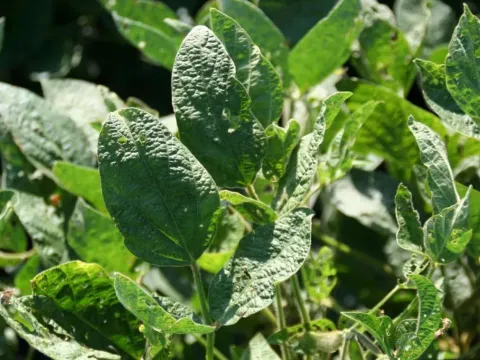
The classic symptom is a mosaic pattern characterized by alternating patches of light and dark green on the leaves. Often, the leaf tissue becomes wrinkled, and vein-clearing or vein-banding is clearly visible.
Leaves often exhibit curling, rugosity, and downward rolling of the margins. Plants are typically stunted due to shortened internodes, and they may show increased branching, giving them a bushy or rosetted appearance.
Necrotic lesions or streaks may appear on leaves or stems under certain conditions. It is important to note that symptoms can be masked by high temperatures, making early diagnosis more challenging.
Reproductive organs are heavily impacted: flower abortion is common, and pods are often deformed, smaller, and contain fewer, low-quality seeds compared to healthy plants.
- Mosaic mottling and leaf chlorosis.
- Severe leaf curling, rugosity, and wrinkling.
- Stunting and shortened internodes.
- Flower abortion and pod deformity.
- Seed coat mottling and hilum pigment issues.
The primary control measure is the use of virus-free certified seeds. Screening seed lots for SMV presence before planting is essential to prevent the introduction of the virus into new fields.
Managing weed reservoirs is critical. Eliminating perennial legumes and other host weeds around field edges reduces the primary inoculum source and limits early-season aphid colonization.
Insecticide applications can be used to manage aphid populations during the first few weeks of crop development. Controlling the vector early is crucial for preventing widespread transmission within the field.
The deployment of resistant or tolerant soybean cultivars is the most effective long-term management strategy. Breeding programs focus on identifying resistance genes that restrict viral replication and spread.
Agronomic practices, including crop rotation and optimized planting dates, help break the disease cycle. Careful timing of planting to avoid peak periods of aphid migration is a key component of integrated pest management.