
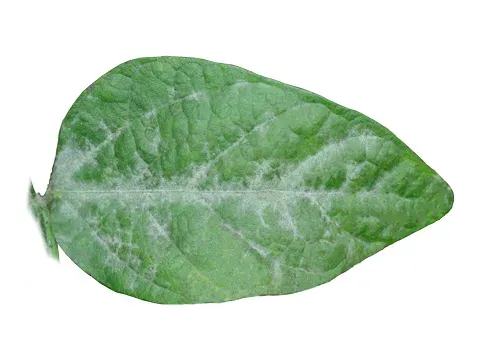
Soybean powdery mildew
Erysiphe glycines
Soybean powdery mildew is caused by the fungal pathogen Erysiphe glycines, an obligate parasite that specifically infects soybean crops. Classified within the phylum Ascomycota, this fungus completes its lifecycle on the surface of host tissues, extracting nutrients through specialized structures called haustoria.
What the section contains
Soybean powdery mildew
The fungus produces asexual spores known as conidia, which are easily dispersed by wind currents, leading to rapid spread across large fields. During the late stages of infection or when environmental conditions become unfavorable, the pathogen develops cleistothecia, which allow it to survive the winter on crop debris.
The disease affects all aerial parts of the plant, including leaves, petioles, stems, and pods. By covering the leaf surface with a mycelial mat, the pathogen significantly reduces the photosynthetic area, which is essential for biomass accumulation and seed development in the soybean plant.
Severe infestations can lead to premature leaf drop, resulting in stunted pods and underdeveloped seeds. This loss of canopy vigor reduces the overall yield potential and can negatively impact the oil and protein content of the harvested beans, causing substantial financial losses for producers.
Symptoms typically become apparent during the reproductive stages of soybean growth. Favorable conditions for disease development include moderate temperatures, typically between 20°C and 25°C, combined with high humidity, which facilitates the rapid germination of fungal spores on plant surfaces.
The most distinctive sign of the disease is the appearance of white, powdery mycelial growth on the upper and lower leaf surfaces. As the infection progresses, these white patches enlarge and eventually coalesce, covering most of the leaf blade in a thick, dusty-looking coating.
- Development of small black dots (cleistothecia) on the mycelial mat.
- Chlorosis (yellowing) of the leaf tissue beneath the fungal colonies.
- Browning and necrosis of leaves as the infection advances.
- Potential twisting or curling of young leaflets and stems.
Effective management begins with the use of resistant soybean cultivars, which is the most sustainable way to reduce disease pressure. Implementing cultural practices, such as proper crop rotation and the incorporation of infected residues into the soil, helps to disrupt the fungal lifecycle.
When environmental conditions favor disease outbreak, the application of fungicides may be necessary. Preventive or early-stage spraying with triazoles or strobilurins is highly recommended to protect the canopy and maintain optimal photosynthetic efficiency throughout the critical pod-filling stages of soybean growth.