
Soybean severe stunt virus
Soybean severe
Soybean severe stunt virus (SSSV) is a plant virus belonging to the genus Fabavirus within the Secoviridae family. It is a significant phytopathogen that primarily spreads through infected seeds, mechanical transmission, or insect vectors.
What the section contains
Soybean severe stunt virus
Systematically, this virus is categorized as a positive-sense single-stranded RNA virus. It possesses high genetic variability, allowing it to survive efficiently in seed stocks, making it a persistent challenge in commercial agriculture.
Various wild legumes act as natural reservoirs for the virus, serving as the primary source of inoculum that facilitates the spread of infection to soybean fields during the early stages of plant development.
Once inside the host, the virus interferes with the host's cellular processes, prioritizing viral protein synthesis over the plant's essential metabolic pathways.
Laboratory diagnosis is essential for confirming the presence of SSSV, typically utilizing techniques such as Enzyme-Linked Immunosorbent Assay (ELISA) or Reverse Transcription Polymerase Chain Reaction (RT-PCR).
The primary host for this pathogen is soybean (Glycine max). Infection causes severe vascular system disruption, which hinders the transport of water, nutrients, and photosynthates throughout the plant.
Beyond soybeans, the virus can infect a wide range of other legume species, posing a broader risk to integrated crop management and agricultural ecosystems.
Affected plants exhibit significantly reduced vigor and growth rates, making them susceptible to environmental stresses, including drought and competition from opportunistic weeds.
Overall biomass is markedly diminished as the leaf area index decreases, which reduces the plant's photosynthetic capacity and hinders optimal grain filling.
Economic damage is substantial, leading to severe yield losses that can reach up to 70% in heavily infested areas, while the resulting grain quality is often poor and unsuitable for future planting.
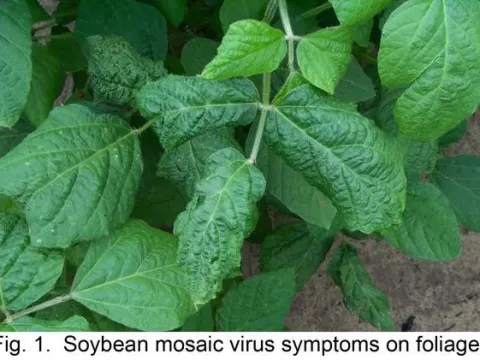
The most common symptoms include distinct mosaic patterns on leaves, characterized by alternating light and dark green patches that indicate viral replication in host tissues.
Stunting is a hallmark symptom of SSSV; infected plants typically show significantly shorter internodes and a reduced overall height compared to healthy specimens.
Foliage often displays abnormal deformation, including curling, crinkling, or puckering of the leaf blades, which disrupts the structural integrity and functionality of the leaves.
In the reproductive stages, plants fail to produce a normal number of pods. If pods do form, they are usually small, malformed, and contain shriveled, low-viability seeds.
In some cases, necrotic spots may develop on the leaf surface, indicating a highly aggressive viral progression that can eventually lead to tissue death and premature senescence.
The cornerstone of management is the use of high-quality, certified, and virus-free seed stocks, as seed-borne transmission is the primary method of early-season infection.
Active monitoring and control of insect vectors, particularly aphids, are vital, as these insects can quickly transmit the virus from weed reservoirs into the soybean canopy.
Cultural practices, such as maintaining weed-free fields and field edges, are essential to eliminate alternative host plants that support the virus during the off-season.
Implementing proper crop rotation strategies helps to minimize the buildup of the pathogen in the environment, effectively breaking the disease cycle.
- Utilizing disease-resistant or tolerant soybean varieties.
- Sanitation practices, including cleaning farm equipment to prevent mechanical spreading.
- Regular scouting for early symptom detection to implement rapid containment measures.