
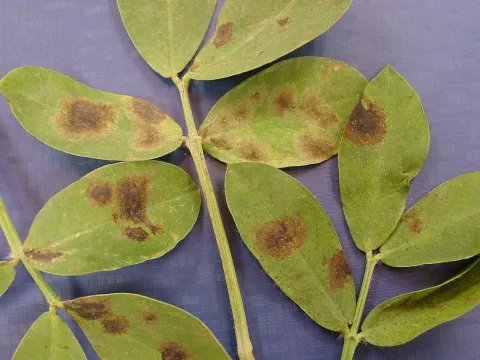
Didymosphaeria arachidicola
Didymosphaeria arachidicola
Didymosphaeria arachidicola is a fungus classified within the Kingdom Fungi, Phylum Ascomycota. This microscopic pathogen is primarily identified as the causal agent of leaf spot disease in cultivated peanuts.
What the section contains
Didymosphaeria arachidicola
Systematically, this organism belongs to the genus Didymosphaeria. Its ecological role is that of a specialized parasite targeting the foliage of its host plant, which directly impacts the plant's photosynthetic potential and vigor.
The life cycle involves both sexual reproduction via perithecia and asexual reproduction through conidia. Spores are primarily dispersed through wind and splashing rain, enabling the pathogen to spread efficiently across a field during periods of high humidity.
Optimal growth conditions for the fungus include temperatures ranging from 20 to 28 °C combined with high moisture levels. Such environmental conditions significantly shorten the incubation period, facilitating rapid epidemic progression.
The pathogen is known to persist in soil and infected plant debris. These residues serve as the main inoculum sources for subsequent growing seasons, necessitating careful field sanitation practices by farmers.
The primary host for this pathogen is the peanut (Arachis hypogaea). The disease causes significant yield losses by damaging the canopy, leading to premature leaf drop and a reduction in the overall vegetative biomass of the crop.
The infection disrupts metabolic processes within leaf tissues due to the pathogen's enzymatic activity. This loss of functional leaf surface area directly reduces the quantity and quality of pods, negatively impacting the market value of the harvest.
Infested plants exhibit reduced vitality and increased susceptibility to secondary stressors, such as drought or other pathogens. In cases of severe epiphytotics, potential crop yield may be substantially compromised.
Furthermore, the fungus can impact seed quality, as seeds from infected plants can become vectors for the pathogen. This poses a significant risk for spreading the disease to new regions through trade or planting.
The economic impact of the disease includes both direct yield loss and the increased costs associated with chemical disease management programs and more frequent fungicide applications.
Early symptoms appear as small chlorotic spots on the leaves, which gradually develop into brown or dark necrotic lesions. These spots are often surrounded by a characteristic yellowish halo indicating tissue degradation.
Microscopic examination of the lesions typically reveals the presence of small, dark, pimple-like structures (pycnidia or perithecia) in the center of the spots. These structures are definitive indicators used by agronomists to diagnose the disease.
As the infection advances, individual lesions merge, causing large sections of the leaf blade to die. Affected leaves become brittle, curl, and eventually fall off, leaving stems exposed and weakening the plant structure.
Under high moisture conditions, a visible fungal growth consisting of conidia may be observed on the underside of the leaves. This conidial layer acts as a source for further spread of the fungus throughout the crop canopy.
Regular field scouting is recommended, particularly following periods of heavy rainfall or high morning dew, as these weather patterns provide ideal conditions for the initial onset and spread of the infection.
Agronomic control strategies primarily focus on the removal or deep burial of plant residues after harvest to eliminate primary inoculum sources. Implementing a robust crop rotation plan is essential to break the pathogen's cycle.
The use of certified, disease-free seed is a critical preventative measure. Treating seeds with appropriate fungicides before planting provides an additional layer of protection against early-season infection of seedlings.
Chemical control involving the application of systemic and contact fungicides is necessary when disease pressure is high. It is important to alternate fungicide modes of action to prevent the development of resistant fungal strains.
Ongoing monitoring of crop health and immediate action upon detecting symptoms are vital for effective disease management. Managing moisture levels and plant density can further help in reducing disease incidence.
- Crop rotation with a minimum 3-year break.
- Elimination of volunteer peanut plants and weed hosts.
- Use of chemical fungicides, such as triazoles or strobilurins.
- Maintenance of adequate plant spacing to promote leaf drying.