
Didymella leaf spot
Didymella exitialis
Description
How to identify
Didymella exitialis is an ascomycete fungus known primarily as a pathogen of cereal crops, including wheat and barley. It is recognized as a significant agent causing leaf spot and stem necrosis in various agricultural regions worldwide.
The fungus produces both asexual conidia and sexual ascospores, allowing it to adapt to diverse environmental conditions and persist in the field on crop residues throughout the dormant season.
The taxonomy of this species classifies it within the family Didymellaceae. It is often studied alongside other leaf-spotting fungi due to the overlapping nature of the symptoms they cause on host plants.
Biological development is heavily dependent on moisture. Spore release is typically triggered by rainfall events, which facilitate the spread of inoculum to healthy host tissues during the growing season.
Identification of the pathogen in a lab setting involves observing the distinct morphology of the ascomata and the presence of two-celled ascospores within the fruiting bodies found on infected leaves.
What it damages
The pathogen specifically targets the leaves, leaf sheaths, and sometimes stems of cereal plants. By causing necrosis, it severely limits the plant's ability to carry out photosynthesis, which is vital for grain filling.
Economic damage is observed in the form of reduced grain yield and lower grain quality. The reduction in green leaf area during the grain-filling phase directly impacts the final mass of the harvest.
In cases of severe infestation, premature senescence of the crop occurs, leading to stunted growth and, in some instances, a significant portion of the crop lodging due to weakened stem integrity.
Infections often progress from the lower canopy upwards. If weather conditions remain conducive to fungal growth, the pathogen can spread rapidly through a field, causing substantial economic loss.
The debilitated state of the plants makes them more susceptible to subsequent attacks by other opportunistic pests and pathogens, complicating the overall crop management strategy.
Signs of infestation
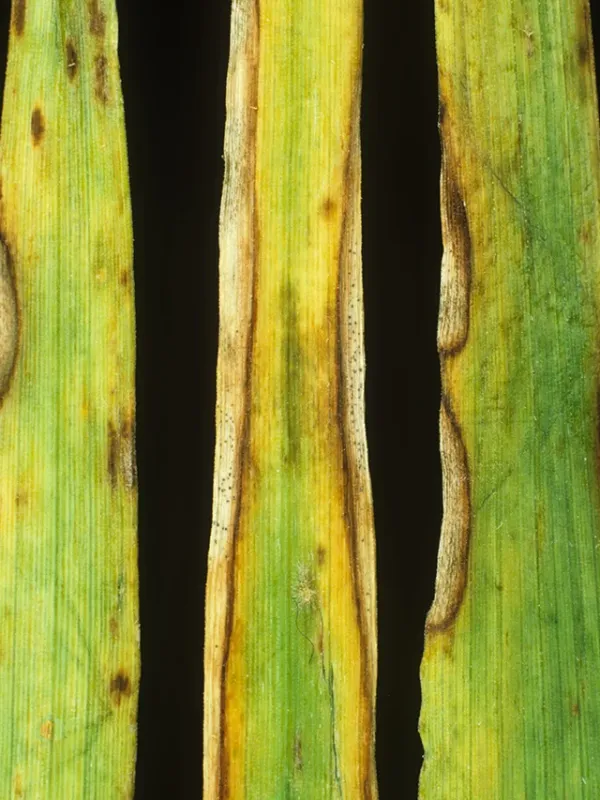
Early symptoms appear as small, chlorotic spots that transition into larger, dark brown necrotic lesions, often with a light-colored center, on leaves and stems.
A yellow halo often surrounds the necrotic areas, indicating the release of metabolites or toxins by the fungus. As lesions expand, they may coalesce, causing the death of large portions of the leaf blade.
The hallmark of Didymella exitialis infection is the formation of small, black, dot-like fruiting structures (pseudothecia) scattered within the centers of the lesions, especially on dead tissue.
During humid weather, these fruiting bodies release spores, creating a visible spread of the disease across the leaf surface and potentially to adjacent plants.
- Dark brown lesions on leaf surfaces.
- Visible black fruiting bodies within lesions.
- Yellowing and premature necrosis of lower leaves.
- Stunting of stems in heavily infected plants.
Control measures
Integrated disease management begins with cultural practices such as deep ploughing, which buries crop residues and accelerates their decomposition, thereby reducing the inoculum load in the field.
Implementing a diverse crop rotation is essential to prevent the buildup of the fungus in the soil, as it denies the pathogen its preferred cereal hosts for several consecutive seasons.
Chemical control via fungicides is recommended during critical growth stages, particularly from the booting to the heading phase, to ensure the protection of the upper leaves.
Selecting and planting resistant cultivars is the most sustainable approach to long-term control, as it minimizes the reliance on chemical inputs and enhances natural plant defenses.
Effective weed control is also necessary, as many wild grasses can act as alternate hosts, keeping the fungal population alive in the field environment between growing seasons.
Causes diseases · 1
Discussion
No discussions yet — be the first.