
Didymella
Didymella
Didymella is a genus of fungi belonging to the order Pleosporales. Among its numerous species, Didymella applanata is the most significant, as it is the causal agent of cane blight in raspberries and other fruit crops.
What the section contains
Didymella
The pathogen persists over the winter as mycelium, perithecia, or pycnidia on infected plant debris. These structures are the primary sources of infection for the new season.
Infection occurs when spores are dispersed by wind, rain splashes, or insects. The fungus requires moisture and mild temperatures to germinate and penetrate the host tissue.
Laboratory identification involves isolating the fungus and examining its reproductive structures under a microscope. Distinguishing between different species requires careful analysis of spore size and morphology.
The biology of the fungus allows it to adapt to various environmental conditions. It successfully maintains its presence in the host's stems, even in dormant periods.
Didymella affects a wide range of plants, including raspberries, tomatoes, cucumbers, and legumes. The fungus specializes in attacking stems, petioles, and buds, causing localized necrosis.
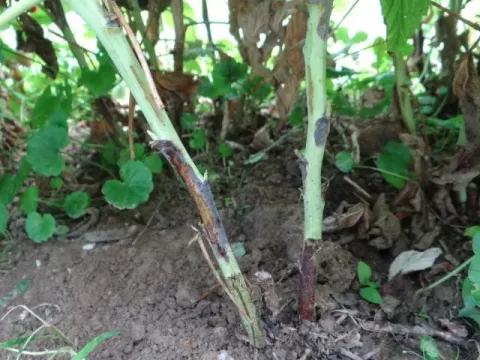
In raspberries, the disease leads to the formation of large lesions that can cause the stem to split. This physical damage weakens the plant, making it prone to breakage and frost injury.
For vegetables, such as tomatoes in greenhouse conditions, the pathogen causes stem rot at the base. This frequently leads to sudden wilting and total death of the plant.
The damage caused by Didymella significantly reduces the quality and quantity of the harvest. Fruits from infected plants often become unmarketable due to discoloration and softening.
If left untreated, the disease spreads rapidly across a plot, leading to cumulative losses in productivity year after year. It can even shorten the lifespan of entire plantations.
The life cycle of the pathogen is closely tied to seasonal changes. Primary infection usually peaks during the early spring as temperatures rise and rain becomes more frequent.
Summer conditions with high humidity and moderate heat facilitate the secondary spread of the fungus. This is when new infections appear on succulent green stems.
The disease progression is often halted by extremely high temperatures or prolonged dry spells. However, the fungus remains alive within the plant tissue, awaiting favorable conditions.
As autumn approaches, the fungus transitions into its sexual stage to form overwintering structures. These bodies are highly resistant to cold, allowing the pathogen to survive winter frosts.
Greenhouse crops are at risk throughout the entire growing season because the indoor environment lacks the natural variability needed to suppress the fungal growth cycles.
The first signs of infection are usually purplish or brown spots located at the base of leaf petioles. These spots tend to expand vertically along the stem as the disease progresses.
As lesions enlarge, the bark often cracks. Close inspection reveals small, dark, pimple-like structures known as pycnidia, which are the visible fruiting bodies of the fungus.
Infected leaves may turn yellow and wither prematurely. The plant often shows signs of stress, such as stunted growth and a general lack of vigor during the fruit-bearing phase.
Fruit symptoms include localized decay, especially near the peduncle, which turns into rot. Such fruits are usually inedible and exhibit a mushy texture.
- Purple-brown lesions on stems
- Splitting and cracking of the bark
- Visible black pycnidia
- Premature leaf drop
- Poor fruit quality
Cultural control is the first line of defense against Didymella. Always remove and destroy infected canes or plant parts to minimize the inoculum source for the next season.
Maintain proper plant spacing and practice regular pruning to improve airflow. Good ventilation reduces humidity around the stems, which inhibits spore germination.
Apply fungicides preventively, especially during the early stages of growth and before flowering. Copper-based sprays or systemic fungicides are typically recommended for professional use.
Balanced fertilization is essential. Over-applying nitrogen encourages rapid, lush growth that is highly susceptible to fungal penetration, so keep phosphorus and potassium levels adequate.
In greenhouses, monitor the environment carefully. Ensure the irrigation system does not wet the stems unnecessarily, and maintain optimal airflow to prevent moisture buildup.