
Diaporthe sojae
Diaporthe sojae
Description
How to identify
The causative agent of the disease is the ascomycete fungus Diaporthe sojae (anamorph Phomopsis sojae). It belongs to the kingdom Fungi, phylum Ascomycota, class Sordariomycetes, and order Diaporthales. This pathogen is a specialized fungus responsible for pod and stem blight in soybeans.
The fungus overwinters in plant debris, seeds, and soil as pycnidia, perithecia, and mycelium. Infection is disseminated through conidia and ascospores, which are spread by wind and rain splashes to healthy plant tissues, initiating the infection process.
The fungal mycelium colonizes the vascular system of the host plant, effectively blocking the transport of water and nutrients. This structural disruption leads to premature wilting and tissue necrosis, which are the hallmarks of this phytopathogen's impact on crops.
Laboratory diagnosis involves culturing the pathogen on specialized media (like PDA), where it forms distinct pycnidia. Identifying the pathogen accurately in a lab setting is essential for determining the correct chemical intervention and disease management strategy.
Understanding the biology of Diaporthe sojae is crucial for agricultural professionals, as the fungus can often exist in a latent stage within the plant before symptoms become visible under stress conditions.
What it damages
The primary host for this pathogen is the soybean (Glycine max). The fungus affects all above-ground plant parts, including stems, leaf petioles, pods, and seeds. In some cases, it can also infect other legumes, which serve as reservoirs for the pathogen.
Infection results in substantial yield losses, primarily due to the formation of small, shriveled, and deformed seeds. Additionally, the fungus compromises the nutritional value of the grain, leading to decreased oil and protein content, which reduces its commercial marketability.
Seeds infected by Diaporthe sojae show reduced germination rates and low seed vigor. Using such infected material for planting establishes a source of primary infection for the next season, necessitating stringent seed treatment protocols.
The pathogen causes premature maturation and stem fragility, making the crop susceptible to lodging. This physical damage significantly complicates harvesting operations and contributes to secondary grain losses during mechanical harvesting.
In years with favorable environmental conditions for the fungus, crop losses can exceed 50%. This high damage potential makes it a priority pathogen for soybean growers in humid temperate and subtropical climates.
When it appears
Disease development is most intense during the flowering and pod-filling stages. However, initial infection often occurs during early growth stages, where the fungus remains dormant until environmental conditions trigger active colonization and symptom expression.
The fungus thrives in warm temperatures, ideally between +20°C and +28°C, combined with high relative humidity. These environmental conditions are necessary for mass spore production and the rapid spread of the disease within the canopy.
The maturation period of the soybean crop is a critical window; rainfall during this stage accelerates the infection of pods and seeds. Widespread outbreaks can occur very rapidly if wet weather persists during the late vegetative and reproductive phases.
Drought periods may slow down the visible progression of the disease but do not eradicate the pathogen. Once moisture levels increase, the fungus resumes its aggressive growth, further damaging the vascular integrity of the host plant.
Proactive monitoring of the crop canopy is essential during humid periods, as the microclimate within dense soybean stands provides the perfect environment for Diaporthe sojae to multiply and spread.
Signs of infestation
Initial symptoms include small brown lesions at the node where the petiole attaches to the stem. These lesions gradually expand and may become grayish-brown, often with a dark margin, as the infection progresses.
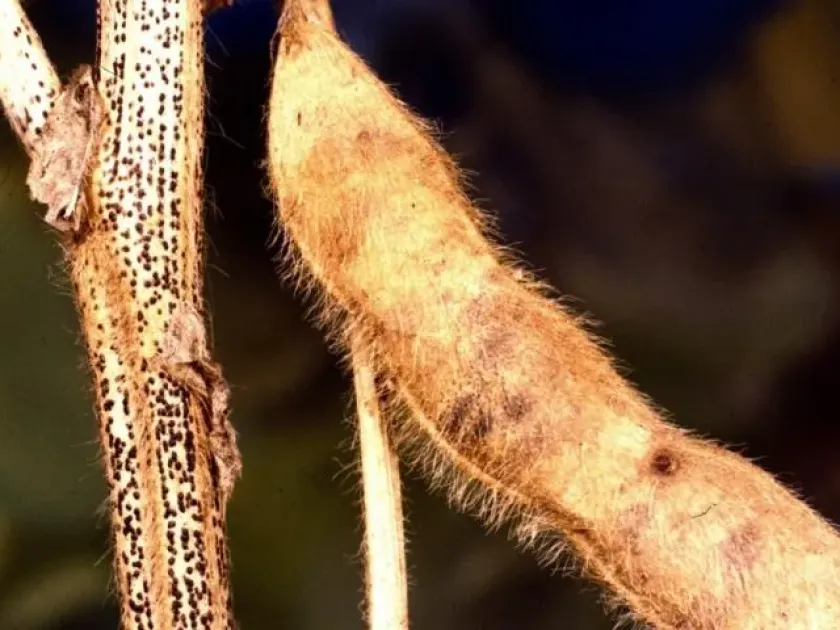
On affected stems, numerous small black specks appear; these are the pycnidia (fruiting bodies) of the fungus. Their appearance is a clear sign that the pathogen is ready to produce spores, increasing the risk of secondary infections in neighboring plants.
Leaf yellowing (chlorosis) usually starts at the leaf margins and leads to premature senescence and abscission. In severe cases, the entire plant wilts and dies, with pods remaining stunted and covered in grayish fungal mats.
- Darkening and brittle stems.
- Visible black pycnidia on the stem cortex.
- Leaf chlorosis and premature defoliation.
- Poorly developed, shriveled pods and seeds.
- Grayish fungal mycelium on infected plant parts.
Dissecting the stem often reveals internal discoloration of the pith and the presence of fungal mycelium, which confirms the destruction of the plant's internal vascular structure by this pathogen.
Control measures
The use of high-quality, disease-free seed is the first line of defense. Treating seeds with systemic fungicides is mandatory to prevent early-season infection and ensure strong, healthy initial plant growth.
Practicing crop rotation with non-host crops for at least 3-4 years is essential to reduce the inoculum load in the soil. Removing alternative legume weed hosts from the field and surrounding areas helps limit the pathogen's survival.
Tillage practices that incorporate crop residues effectively into the soil help accelerate decomposition and reduce the survival time of the fungus. Good residue management is a key component of an integrated pest management program.
Chemical control during the growing season is effective if applied preventively or at the earliest signs of infection. Fungicides from the strobilurin and triazole classes are commonly used, with rotation of active ingredients advised to manage resistance.
Selecting soybean varieties with genetic resistance to pod and stem blight is the most cost-effective and sustainable long-term solution. Growers should prioritize the use of these resistant cultivars, especially in regions with high historical disease pressure.
Causes diseases · 1
Discussion
No discussions yet — be the first.