
Cytosporina
Cytosporina
The pathogen belongs to the group of mitosporic fungi (Deuteromycetes), genus Cytosporina. It is a well-known fungal agent causing necrotic bark diseases in various orchard trees and woody plants.
What the section contains
Cytosporina
The fungus develops within the inner bark and cambial layers. It produces pycnidia, small fruiting bodies embedded in the host tissue, which serve as reservoirs for the pathogen and centers for conidia dispersal.
Survival occurs within infected branches during winter months. With the onset of spring and high humidity, the fungus becomes active, releasing conidia in mass that are spread by rain splashes and wind currents.
The lifecycle is highly opportunistic, often attacking trees that have already suffered from winter frost, sunscald, or mechanical injury, making it a severe threat in neglected orchards.
Scientific identification typically involves isolating the pathogen on agar media and examining the characteristic morphology of the conidia, which helps differentiate it from other bark-inhabiting fungi.
Cytosporina primarily affects pome and stone fruits, including apple, pear, and plum trees. It targets the bark and vascular system, causing localized necrosis that can eventually girdle entire branches.
As the infection progresses, the transport of water and nutrients is severely restricted, leading to leaf chlorosis, wilting, and eventual death of the affected portion of the crown.
The damage to the bark creates large, open entry points for other opportunistic pathogens, potentially leading to complex decay issues that significantly shorten the lifespan of the orchard.
Economic losses arise from reduced fruit production, the necessity of removing large canopy sections, and, in severe cases, the complete removal of infected trees to protect the surrounding healthy population.
Once established in a tree, the disease is notoriously difficult to eradicate completely without aggressive pruning and stringent sanitary measures to limit the spread of spores.
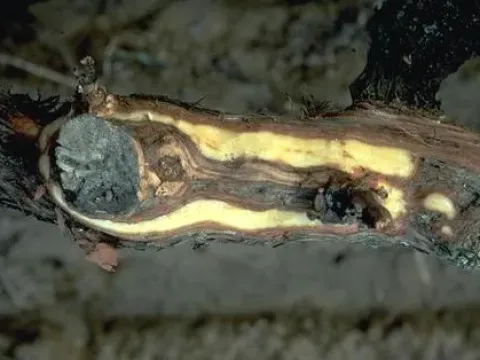
Initial infection signs appear as red-brown or sunken areas on the bark. The tissue eventually dries out and becomes brittle, often pulling away from the underlying wood.
The appearance of numerous small, pimple-like bumps (pycnidia) on the bark surface is a diagnostic sign of this infection, distinguishing it from general tree physiological issues.
Leaves on infected branches often curl, show signs of yellowing, and fall prematurely. This defoliation is a clear indicator that the branch's vascular system has been compromised by the fungus.
Under humid conditions, light-colored spore tendrils may extrude from the pycnidia, which may dry out later, leaving small cracks where the pathogen spores have been released into the environment.
Internal examination of the branch will show a distinct boundary line between healthy green tissue and infected brown, necrotic wood, confirming the presence of the fungal mycelium.
The cornerstone of management is strict sanitation. All infected branches must be pruned at least 15 cm below the visible necrosis, with tools sterilized between cuts to prevent cross-contamination.
All removed infected material must be burned immediately to eliminate the source of inoculum, as the fungus can continue to produce spores on dead wood for several seasons.
Cultural practices focused on tree vigor are essential: maintain proper irrigation, balanced fertilization, and protect tree trunks from sunscald and frost cracks to minimize entry points.
Preventative fungicide applications, particularly copper-based sprays, applied during the dormant season and early growth stages, help to inhibit spore germination and protect fresh bark wounds.
- Sanitary pruning of all cankered tissues
- Disinfection of pruning tools after each tree
- Whitewashing trunks to prevent sunscald
- Spring and autumn fungicide spray programs