
Cytospora canker
Cytospora chrysosperma
Cytospora chrysosperma is a species of fungus in the order Diaporthales. It acts as a primary pathogen causing canker diseases on a wide range of woody plants.
What the section contains
Cytospora canker
The fungus survives the winter as mycelium within the host tissues, producing pycnidia that release infectious spores during periods of high humidity.
As a facultative parasite, it predominantly infects plants that are already stressed by drought, poor nutrition, or winter-related tissue damage.
The pathogen utilizes various entry points, including frost cracks, pruning wounds, insect feeding sites, and other bark injuries to penetrate the tree.
Biological dispersal occurs via wind currents and water splashes, allowing the pathogen to move rapidly through an orchard under favorable environmental conditions.
This pathogen impacts a broad spectrum of deciduous species, including apple, pear, willow, poplar, and many ornamental shrubs.
The primary damage is the formation of cankers on branches or trunks, which effectively girdle the tree and disrupt the vascular system.
Affected branches typically show leaf chlorosis, premature wilting, and dieback, eventually leading to the death of the entire tree if the trunk is girdled.
Cytospora canker reduces the longevity of trees and significantly decreases the yield and quality of the fruit produced in infested orchards.
In nurseries, the disease can cause severe losses by preventing the proper development of young trees and forcing mass disposal of infected stock.
Initial symptoms include the appearance of discolored, sunken areas on the bark, which may be reddish-brown or dark in color.
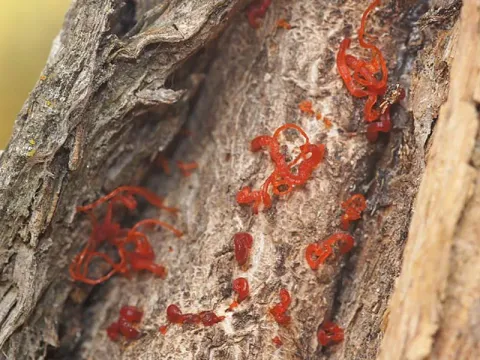
Small, pinhead-sized, pimple-like bumps called pycnidia form on the surface of the bark within the cankerous tissue.
Under moist conditions, these structures exude tiny, thread-like masses of spores that are often yellow or orange in appearance.
Internal tissue examination reveals that the wood underneath the canker becomes decayed, dark brown, and friable compared to the healthy surrounding wood.
Leaves on symptomatic branches often turn yellowish, curl at the edges, and exhibit early abscission during the growing season.
The primary control method is the physical removal of infected wood, ensuring that cuts are made well into healthy, green tissue.
All pruning tools must be disinfected between cuts to prevent the mechanical transmission of fungal spores to healthy parts of the tree.
Orchard health should be prioritized through proper irrigation, fertilization, and site selection to minimize plant stress and susceptibility.
Protective sprays containing copper compounds can be applied to susceptible trees to create a barrier and reduce the germination of landing spores.
- Sanitary pruning of all dead and dying branches.
- Proper wound care using protective grafting sealants.
- Monitoring and control of bark-boring insects.
- Avoidance of mechanical injuries during cultivation.