
Cytospora canker
Leucocytospora leucostoma
Description
How to identify
Cytospora canker, caused by the fungus Leucocytospora leucostoma (formerly Cytospora leucostoma), is a destructive pathogen that attacks the bark of various fruit trees.
The fungus enters the host plant through wounds caused by pruning, sunscald, frost damage, or insect activity. Once inside, the pathogen invades the cambium layer.
The fungus thrives in moist environments and spreads its spores through rain splashes and wind. These spores are capable of infecting new wood during the entire growing season.
Leucocytospora leucostoma overwinters in the bark of infected branches, where it produces fruiting structures known as pycnidia to survive harsh conditions.
Biological resilience of the tree is the primary factor limiting the progression of the fungus. Stressed trees are significantly more susceptible to successful colonization.
What it damages
This pathogen primarily affects stone fruit trees, including cherries, apricots, plums, and peaches. It causes severe necrosis in the bark and underlying vascular tissue.
By disrupting the flow of water and nutrients, the fungus leads to dieback of branches and limbs. If the infection reaches the main trunk, the entire tree may die.
Damage results in reduced fruit production, stunted tree growth, and increased vulnerability to secondary pests and pathogens that exploit the weakened state of the tree.
Orchards with high density or poor maintenance are particularly at risk, as the pathogen can spread rapidly from one tree to another during wet weather.
Economic losses are significant, often necessitating the removal of entire blocks of trees to prevent further spread of the fungal infection within the orchard.
Signs of infestation
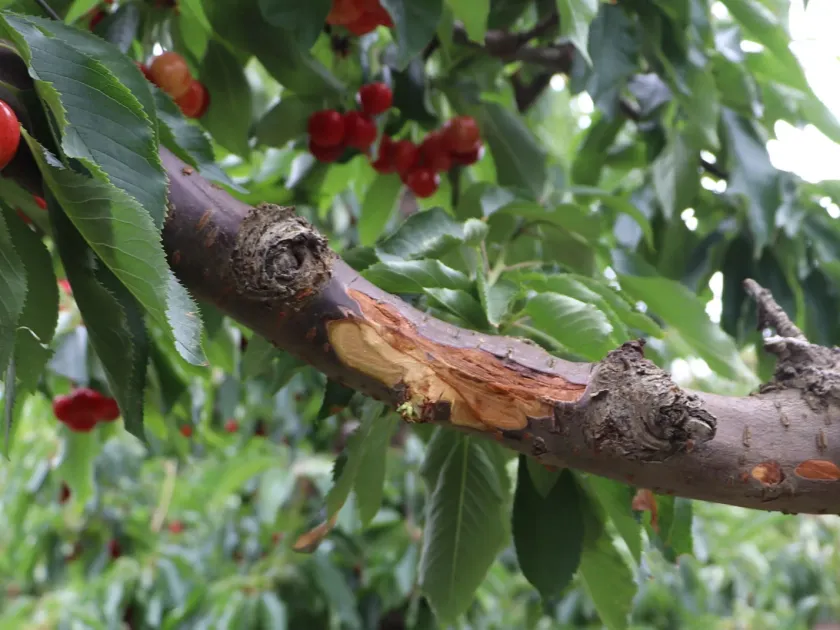
Symptoms often manifest as sunken, dark-colored areas on the bark. These cankers may be elongated or irregular, often surrounded by healthier-looking tissue.
The presence of tiny, pin-head-sized bumps called pycnidia on the dead bark surface is a key diagnostic feature. During moist weather, these may ooze spores.
Leaves on infected branches will exhibit signs of stress, such as yellowing, wilting, and premature drying, while remaining attached to the branch for some time.
Gummosis, or the oozing of sap from the bark, is a common reaction of stone fruit trees to the fungal invasion, indicating the tree is attempting to seal the infection.
Unlike other conditions, the infected bark remains tightly adhered to the wood, becoming hard and brittle as the fungus continues to colonize the xylem tissues.
Control measures
Management focuses on stress reduction. Keeping trees healthy through proper irrigation and nutrition prevents the infection from taking hold in the first place.
Pruning out infected branches is critical. Cuts must be made well below the canker into healthy wood, and tools must be sterilized between every cut.
Protecting trunks from environmental damage such as sunscald and winter injury is essential. Whitewashing trunks helps prevent bark cracking and pathogen entry.
Fungicide applications, specifically copper-based sprays during the dormant season, can help manage spore loads on the surface of the bark.
- Proper site selection and spacing to improve air circulation and tree vigor.
- Immediate removal and disposal (burning) of infected wood to reduce inoculum levels.
- Avoid working in the orchard during wet conditions to prevent spore distribution.
Causes diseases · 1
Discussion
No discussions yet — be the first.