
Cymbidium mosaic virus
Cymbidium mosaic
Cymbidium mosaic virus (CymMV) belongs to the genus Potexvirus. It is one of the most widespread and economically devastating pathogens affecting ornamental plants within the Orchidaceae family.
What the section contains
Cymbidium mosaic virus
The pathogen consists of flexible, filamentous virus particles. Unlike many other plant viruses, it lacks a specific insect vector, such as aphids or thrips, making its transmission heavily reliant on human intervention.
Infected plants serve as the primary reservoir for the virus, maintaining high concentrations of the pathogen in their sap throughout their entire lifespan. The virus can persist in plant tissues for years without showing visible symptoms in the early stages.
Professional nurseries and laboratories identify the virus using techniques such as Enzyme-Linked Immunosorbent Assay (ELISA) or Polymerase Chain Reaction (PCR). Visual inspection is often insufficient for an accurate diagnosis.
Transmission occurs exclusively through mechanical means: via contaminated tools, contact with hands, or physical rubbing between infected and healthy plant tissues. The virus is highly stable and can remain infectious on tools for extended periods.
The virus primarily affects plants in the Orchidaceae family, including genera such as Cymbidium, Cattleya, Phalaenopsis, Dendrobium, and other commercially important varieties.
The infection causes systemic damage to the plant. The virus spreads rapidly through the vascular system, colonizing every organ, from roots to flower spikes and flower buds.
While orchids are the primary hosts, the virus can potentially infect other monocotyledonous plants. However, the commercial orchid industry suffers the most significant financial losses due to this pathogen.
Severe infection leads to a sharp decline in product quality. Flowers become deformed and lose color intensity, rendering the plants unsuitable for the retail market.
Long-term, the virus causes general physiological decline, which eventually leads to the slow death of the specimen or a total loss of blooming capacity.
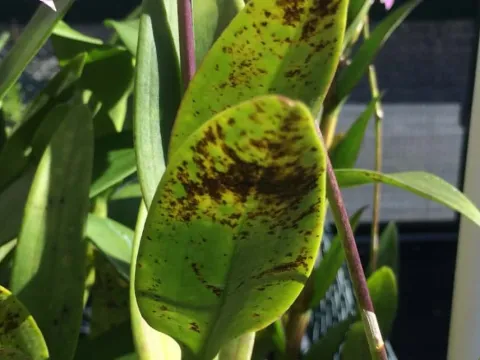
Initial symptoms include a mosaic pattern on the leaves, characterized by alternating light-green and dark-green spots, chlorotic streaks, or thin lines.
On flowers, the virus manifests as necrotic spots or irregular, aberrant pigmentation. Growers often mistake these signs for natural color variations or poor environmental conditions.
As the disease progresses, leaf deformation, thinning, and premature tissue necrosis occur. The plant stops growing and fails to develop new flower spikes.
In some orchid species, the damage may present as deep necrosis on stems and pseudobulbs, which gradually darken and deteriorate over time.
- Chlorotic mottling on leaf surfaces.
- Deformation of flower spikes and buds.
- Significant reduction in bloom frequency.
- Necrotic tissue lesions.
- Overall stunted growth and lack of vigor.
There is currently no effective cure for viral infections in plants. Once a plant is infected, it remains a permanent source of the virus throughout its life.
The primary defense strategy is strict hygiene. Pruning tools (knives, shears) must be thoroughly disinfected after every use or replaced with single-use sterile implements.
If signs of the virus are detected, the infected plant must be immediately isolated from the collection. Ideally, the plant should be destroyed by burning to prevent the spread of the pathogen.
Growers should avoid overcrowding pots, as leaves brushing against each other can facilitate the transfer of viral particles through micro-abrasions on the leaf surface.
When purchasing new orchids, it is essential to maintain a long quarantine period and perform pre-purchase testing using reliable diagnostic kits.