
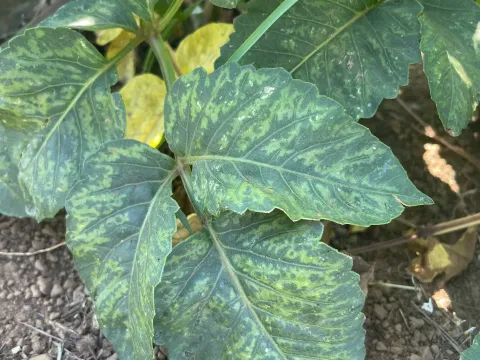
Dahlia mosaic
Dahlia mosaic
Dahlia mosaic virus (DMV) is a plant pathogenic virus belonging to the genus Caulimovirus. It is a pararetrovirus containing double-stranded DNA, which is highly specialized for infecting plants of the Asteraceae family.
What the section contains
Dahlia mosaic
The virus acts as an obligate parasite, utilizing the host plant's cellular machinery to replicate its genetic material. It spreads systemically through the phloem, eventually colonizing all parts of the plant.
Viral particles are relatively stable in the environment. They can be found in plant tissues and debris, making sanitation a crucial aspect of viral disease management in gardening and farming.
Diagnostic identification typically involves observing characteristic symptoms, although molecular techniques like PCR or ELISA are necessary for definitive confirmation in laboratory settings.
The virus is primarily transmitted by aphids (such as Myzus persicae) in a non-persistent manner. It can also be spread through infected tubers and contaminated mechanical tools used during cultivation.
The main host is the garden dahlia (Dahlia x cultorum). The disease severely compromises the aesthetic value of the plants, rendering them unsuitable for display or commercial sales.
Infection leads to reduced plant vigor, stunted growth, and a significant decrease in the number and quality of flowers. The weakened physiological state makes plants susceptible to secondary pathogens.
Since the virus resides in the tubers, infected plants act as a permanent source of inoculum. Using tubers from infected mother plants ensures the virus persists in the soil and spreads to subsequent generations.
Economic impact is significant for commercial growers, as entire stocks can be lost due to viral accumulation. Prevention is the only effective way to manage the pathogen in commercial operations.
The virus can also be maintained in asymptomatic host weeds, which act as a reservoir in the surrounding environment, creating a constant risk of re-infection for new dahlia plantings.
The classic symptom is a distinct mosaic pattern on leaves, appearing as yellow or light green patches often concentrated along the veins, which creates a feathering effect.
Leaves may show severe chlorosis, distortion, and crinkling. The size of the leaf blades is often reduced, giving the plant a stunted or deformed appearance compared to healthy specimens.
Internodes become shortened, leading to a bushy, stunted habit. This morphological change is a reliable sign of systemic viral stress in dahlia plants.
Flower quality is significantly affected; blooms may be reduced in size, display irregular or asymmetrical petal shapes, and show deviations in natural color patterns.
In severe cases, plants may exhibit necrotic spots on leaves and stems as the virus causes extensive cell death and disruption of normal metabolic and nutrient transport processes.
The primary control strategy is strict phytosanitary management. Any plant showing symptoms must be immediately rogued (dug up and destroyed) to prevent the spread to neighboring plants.
Aphid population management is vital. Using systemic insecticides can significantly reduce the pressure of insect vectors, thereby lowering the probability of virus transmission within the garden.
Implement rigorous sanitation of all gardening tools. Disinfect blades with ethanol or a suitable bleach solution after working on each plant to avoid the mechanical transfer of sap.
Only source tubers from reputable, virus-indexed suppliers. Avoid propagating plants from any individual that has shown even minor signs of mosaic or growth distortion in the past season.
- Remove all perennial weeds from the planting area to eliminate virus reservoirs.
- Establish spatial isolation between new plantings and older, potentially infected crops.
- Practice good crop rotation to disrupt the cycle of vectors and plant debris.