
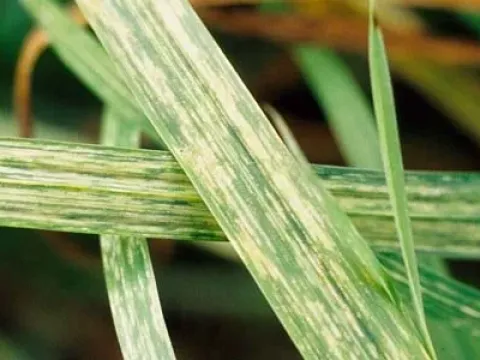
Cocksfoot mottle
Cocksfoot mottle
Cocksfoot mottle virus (CfMV) is the pathogen responsible for this disease, belonging to the genus Sobemovirus. It is a small, isometric virus that primarily affects orchard grass (cocksfoot).
What the section contains
Cocksfoot mottle
The virus is known for its environmental stability, allowing it to persist in the field environment and potentially survive on crop residues between growing seasons.
Transmission occurs through mechanical contact, such as farm equipment during mowing, and via insect vectors, primarily leaf beetles of the genus Oulema.
As a systemic pathogen, once the virus enters the plant vascular system, it spreads throughout the entire organism, leading to chronic infection that persists for the plant's lifespan.
Molecular diagnostics, such as ELISA, are standard practices used by agronomists to distinguish CfMV from other viral infections that produce similar mosaic-like symptoms in grasses.
The primary host is orchard grass (Dactylis glomerata), which is highly susceptible and serves as the main reservoir for the virus in temperate grassland regions.
Economic damage is most pronounced in seed production fields, where the virus significantly reduces seed yield, viability, and the overall quality of the resulting harvest.
In forage production, the infection causes a reduction in vegetative growth, leading to decreased dry matter yield and lowering the nutritional quality of the pasture.
Chronic infection weakens the plants, making them more susceptible to secondary stressors like drought, frost, and competition from weeds, leading to stand thinning.
Over time, the virus reduces the longevity of grass stands, forcing farmers to reseed pastures earlier than expected and increasing operational input costs.
Symptoms typically manifest as mosaic patterns, consisting of pale green or yellow streaks and spots on the leaves that follow the venation of the leaf blade.
As the infection progresses, leaves may become distorted, curled, or stunted, showing symptoms of severe chlorosis that eventually leads to necrotic tissue formation.
The overall growth of the plant is stunted, and the number of tillers per plant often decreases, resulting in an uneven and sparse appearance of the crop stand.
Inflorescences (panicles) in infected plants are often poorly developed or deformed, which is a major indicator of the systemic impact of the virus on plant reproduction.
Visual symptoms can be highly variable depending on the specific cultivar of orchard grass and the environmental conditions, often appearing more intense during rapid growth phases.
The use of certified virus-free seed and resistant cultivars is the primary line of defense against the establishment of CfMV in agricultural production systems.
Effective management of insect vectors, particularly Oulema beetles, is essential and should be integrated into the farm's regular pest control program.
Establishing spatial isolation between new cocksfoot plantings and old, infected grassland areas helps reduce the risk of primary viral transmission by insect vectors.
Good sanitation practices, including the cleaning of mowing equipment after moving from an infected area to a clean one, help prevent mechanical spread of the virus.
Regular monitoring of forage stands and wild grass reservoirs allows for early detection, enabling farmers to take targeted measures to contain the infection before it spreads.