
Chickpea yellows
Chickpea yellows
Chickpea yellows is a viral disease caused by the Chickpea yellows virus (CpYV), which is a member of the Polerovirus genus. This pathogen is a small, non-enveloped virus that contains a single-stranded RNA genome.
What the section contains
Chickpea yellows
The virus is exclusively transmitted by aphids, with the pea aphid (Acyrthosiphon pisum) being one of the primary vectors. The transmission is persistent, meaning the aphid acquires the virus through feeding and can transmit it for the remainder of its life.
The pathogen thrives in the plant's phloem tissue, effectively disrupting the translocation of nutrients. This systemic colonization prevents the plant from maintaining proper energy balance, leading to the characteristic yellowing.
The virus cannot be transmitted mechanically or through seeds, which highlights the importance of controlling the insect vector population. Effective management starts with understanding this biological dependency.
Laboratory diagnosis usually involves serological tests like ELISA to detect the virus in symptomatic leaf tissue. Rapid field identification is often based on the observation of specific yellowing patterns coupled with aphid infestation.
The disease primarily impacts chickpea (Cicer arietinum) crops worldwide. Infected plants suffer from stunted growth, reduced biomass, and significant yield losses, which can sometimes result in complete crop failure.
Besides chickpea, the virus has a host range that includes various other legumes. This versatility allows the pathogen to persist in agricultural landscapes, moving between wild weeds and cultivated crops throughout the season.
The infection cycle begins in the spring when winged aphids migrate from overwintering sites, such as weeds or early-planted legumes, into new chickpea fields. This movement initiates the primary infection stage.
Secondary spread occurs as the season progresses and the aphid population multiplies. Wingless aphids move between neighboring plants, expanding the infection patches within the field.
Environmental conditions play a crucial role, as warm and dry weather promotes rapid aphid reproduction. This leads to faster virus spread and a higher incidence of disease by mid-season.
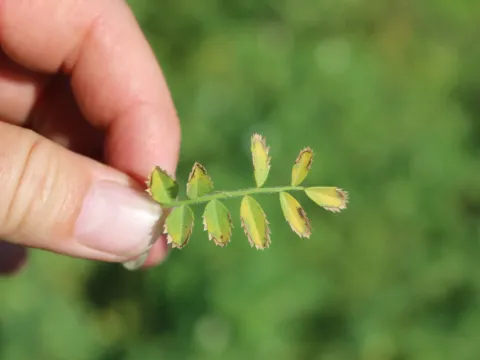
The most prominent sign is the chlorosis (yellowing) of leaves, which typically starts at the top of the plant and spreads downward. The foliage may appear pale, yellowish, or sometimes even bronze-colored.
Affected plants exhibit severe stunting, characterized by shortened internodes. The overall structure of the plant appears compact and significantly smaller than healthy, adjacent plants in the field.
Flower drop and poor pod set are common outcomes of the disease. Any pods that do develop are usually smaller, shriveled, and contain low-quality, undeveloped seeds, drastically reducing harvest quality.
In addition to foliar symptoms, the root system of infected chickpea plants is often poorly developed. This leaves the plant more susceptible to secondary stressors like drought or root rot fungi.
The plant may eventually lose its vigor, leading to premature senescence or total collapse, especially if the initial infection happened during the early growth stages.
Management of Chickpea yellows relies heavily on Integrated Pest Management (IPM) strategies. Controlling the aphid population with systemic insecticides is the most direct approach to reducing disease incidence.
Sanitation practices, such as removing weeds that serve as virus reservoirs, are vital. Clearing field borders and fallow lands of alternative host plants helps break the disease cycle before the season starts.
Choosing appropriate planting dates can help avoid the peak migration period of aphid vectors. When possible, planting resistant varieties is the most effective and long-term solution for farmers.
Maintaining proper field density is important; overcrowding can create a conducive microclimate for aphid movement. Ensuring healthy crop growth through optimal fertilization can also help plants better withstand the infection.
- Monitoring aphid populations using yellow sticky traps.
- Applying systemic insecticides early in the season.
- Implementing wide crop rotations to reduce pathogen build-up.