
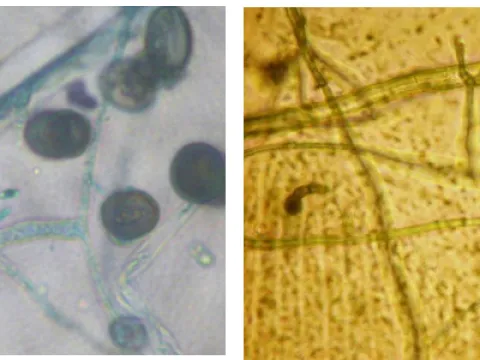
Ceratocystis paradoxa
Ceratocystis paradoxa
Ceratocystis paradoxa is a destructive ascomycete fungus belonging to the Ceratocystidaceae family. Its anamorphic state is widely known as Thielaviopsis paradoxa.
What the section contains
Ceratocystis paradoxa
This pathogen is prevalent in tropical and subtropical climates and is a major concern for industrial agriculture. It persists in soil and crop debris through highly resilient chlamydospores.
The fungus acts primarily as a wound pathogen, entering plant tissues through physical damage caused by harvesting, handling, or insect activity.
The mycelium exhibits rapid growth, and the pathogen reproduces by forming both endoconidia and dark, thick-walled chlamydospores, allowing it to adapt to diverse environments.
As a member of the Ascomycota, this fungus possesses high enzymatic activity, enabling it to aggressively decompose various plant tissues, particularly those rich in carbohydrates.
Ceratocystis paradoxa causes significant economic losses in crops such as pineapples, sugarcane, coconut palms, cacao, and oil palms.
In pineapples, it is the primary agent of "black rot" (water blister), which affects both mature fruit in storage and planting material during the establishment phase.
In sugarcane, it causes the "pineapple disease," characterized by the blackening of internal stem tissues, often accompanied by a distinct, fermented smell.
For coconut and oil palms, the fungus can cause stem bleeding and crown rot, which may lead to the eventual death of the entire tree.
Severe infestations can lead to yield losses exceeding 50% if sanitary measures are not strictly implemented during harvest and post-harvest handling.
The pathogen thrives in warm and humid conditions, with optimal development occurring at temperatures between +25°C and +30°C.
Disease outbreaks are most common during rainy seasons when high moisture levels in the soil and atmosphere facilitate the rapid germination of spores.
Increased susceptibility coincides with periods of active harvesting or cultivation, as fresh wounds provide easy entry points for fungal infection.
In storage facilities, the infection often spikes shortly after the arrival of produce if the fruits were contaminated in the field or during transit.
The fungus is highly resilient; chlamydospores allow the pathogen to remain viable in the soil for extended periods, even through dry seasons.
The initial signs of infection include the appearance of brownish or black, water-soaked spots that spread rapidly across the affected plant part.
When infected stems or fruits are cut, the internal tissue appears darkened or black, often emitting an odor reminiscent of pineapple fermentation or ethanol.
A dense, olive-black or greyish mold often covers the surface of damaged areas, consisting of a mass of fungal conidia and chlamydospores.
Affected pineapple fruits become soft and lose their structural integrity, eventually decaying entirely and acting as a source of inoculum for healthy produce.
In palm species, symptoms include dark exudates bleeding from cracks in the trunk, followed by the wilting and eventual browning of the leaves.
The primary control strategy involves rigorous sanitation and the prevention of physical trauma to plants during harvesting and transportation.
Using certified, disease-free planting material is essential to prevent the introduction of the pathogen into new areas.
Fungicide treatments applied to freshly cut surfaces or planting materials can effectively reduce the risk of infection during the vulnerable stages of development.
Proper hygiene in packing houses, including the regular disinfection of tools and equipment, is critical for reducing post-harvest losses.
- Improved field drainage to prevent waterlogging and reduce soil humidity.
- Prompt destruction of infected plant debris by burning or deep burial.
- Control of insect pests that act as vectors or create entry wounds.
- Rapid cooling and temperature management of harvested produce to suppress fungal activity.