
Ceratobasidium ochroleucum
Ceratobasidium ochroleucum
Description
How to identify
Ceratobasidium ochroleucum is a basidiomycete fungus belonging to the order Cantharellales. It acts as a specialized phytopathogen capable of causing significant disease in various woody and herbaceous plants.
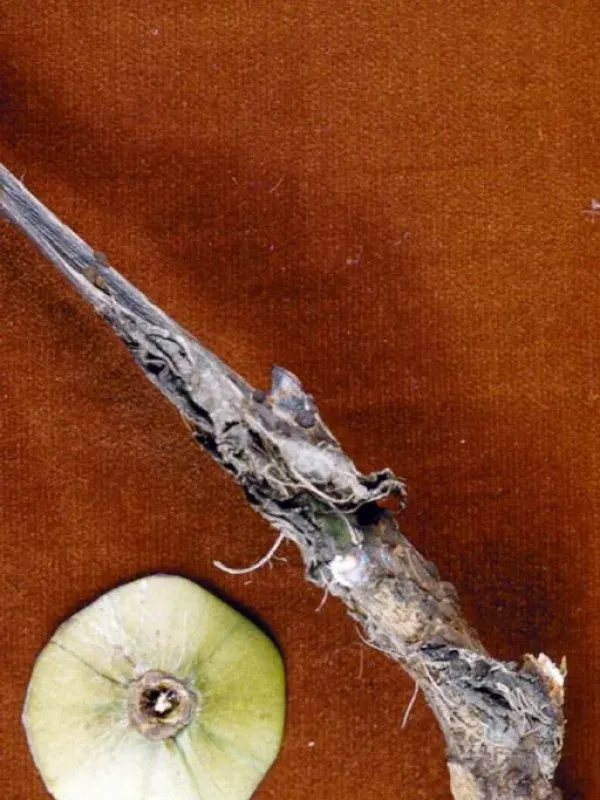
The fungus is characterized by its ability to produce a characteristic yellowish or ochre-colored mycelial mat on the surface of plant stems, branches, and occasionally on leaves under high humidity conditions.
Biologically, it exhibits both parasitic and saprotrophic capabilities, allowing it to survive on dead plant debris and within the soil when a living host is unavailable.
Identification is often based on the observation of the specific mycelial color and the formation of thin, white-to-yellow threads (hyphae) that grow along the host surface.
This pathogen prefers warm and humid environments, which makes it particularly problematic in tropical and subtropical agriculture, as well as in poorly ventilated greenhouses.
What it damages
Ceratobasidium ochroleucum affects a wide range of hosts, including fruit-bearing trees like apple and pear, various ornamental shrubs, and several vegetable species.
The primary damage occurs on the bark and stems, where the fungal mycelium colonizes the tissue, leading to necrosis and the formation of cankers that inhibit the transport of water and nutrients.
In young trees or seedlings, the infection can cause systemic weakness, leading to leaf chlorosis, premature senescence, and ultimately the death of the plant if the stem is girdled by the fungus.
Economic losses are usually associated with the decline in plant growth vigor, loss of aesthetic value in ornamental settings, and direct mortality of planting stock.
In nurseries, the dense arrangement of plants provides ideal conditions for the rapid spread of the mycelium, causing outbreaks that can destroy significant portions of a crop in a short time.
Signs of infestation
The most visible sign of infection is the emergence of a light, cobweb-like mycelial growth on the bark or stems, which gradually darkens into a yellow or ochre shade.
As the disease progresses, the underlying tissue becomes depressed and brown, forming distinct necrotic lesions that may merge to surround the entire circumference of the stem.
Leaves on infected branches often show symptoms of water stress, including wilting and necrotic spotting, even if the root system is ostensibly functional.
During periods of high moisture, small, glistering structures may be observed within the mycelial mat, indicating active spore production or colonization of the host tissue.
A persistent smell of decay or fungal activity is often noticeable around severely affected plant parts, especially during damp, stagnant weather conditions.
Control measures
Effective management of Ceratobasidium ochroleucum requires a combination of strict cultural practices and the judicious use of chemical control agents.
Sanitation is paramount; all infected wood and plant debris must be pruned and disposed of properly to eliminate the primary source of the fungal inoculum.
- Increasing air circulation within the plant canopy through strategic pruning to reduce humidity.
- Applying fungicides (such as copper-based or systemic azoles) as a preventative measure in high-risk zones.
- Ensuring proper drainage to minimize soil moisture, which helps prevent the splash-dispersal of fungal spores.
- Implementing rigorous inspection of new nursery stock to prevent the introduction of the pathogen into clean areas.
- Maintaining plant vigor through balanced nutrition to improve natural resistance against secondary infection.
Causes diseases · 1
Discussion
No discussions yet — be the first.