
Ceratocytis fimbriata
Ceratocytis fimbriata
Description
How to identify
Ceratocystis fimbriata is an ascomycete fungus belonging to the family Ceratocystidaceae. It is a highly aggressive plant pathogen responsible for serious vascular and root diseases across various plant species globally.
The fungus colonizes the plant tissues, specifically the vascular system, through the production of mycelium that spreads through xylem vessels. This restricts the upward flow of water and nutrients, leading to systemic wilting.
Reproduction occurs both sexually, through the formation of perithecia with elongated beaks, and asexually, via endoconidia. These spores are highly mobile and serve as the primary inoculum for widespread infection.
The organism is notable for its ability to survive in both soil and plant debris, making it a persistent threat in agricultural environments. Its versatility allows it to infect diverse hosts under varying environmental conditions.
There are multiple strains of this pathogen, each exhibiting specific host preferences. Researchers categorize these as host-specific populations, which explains why the disease impacts various unrelated crops differently.
What it damages
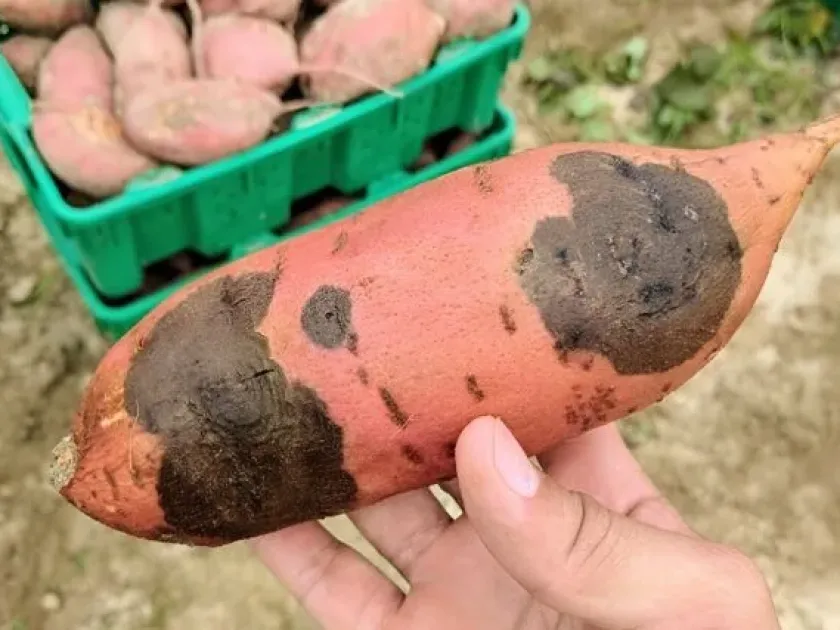
The pathogen is particularly notorious for causing "black rot" in sweet potatoes, as well as destructive canker and wilt diseases in coffee trees, cacao, citrus, and various deciduous fruit trees.
Infection results in necrotic lesions on roots, stems, and trunks. These lesions expand rapidly, killing the living tissues and eventually leading to the death of the entire plant if left unmanaged.
Economic losses are severe, ranging from yield reduction in tuber crops to the complete loss of orchards and plantations. The degradation of fruit and tuber quality also renders the harvest unmarketable.
Furthermore, the pathogen acts as a quarantine pest in many countries. Its presence in a field often leads to trade restrictions, preventing farmers from exporting their products to international markets.
The disease spread is rapid, especially in plantations where monoculture is practiced. The proximity of hosts allows the pathogen to move quickly through the root systems or via contaminated tools.
Signs of infestation
Visible symptoms often include yellowing of leaves (chlorosis), wilting, and gradual dieback of the canopy. Affected plants appear stunted and struggle to produce new vegetative growth.
A diagnostic sign is the presence of dark, sunken lesions on stems or roots. When cut, the underlying tissue typically shows a distinct browning or blackening of the vascular bundles.
Under humid conditions, a fuzzy, gray-to-black mass of fungal spores may develop on the surface of the lesions. This mass is a significant source of secondary spread via wind or water droplets.
For tuberous crops, the rot manifests as dry, sunken black patches that extend into the flesh. In storage, these patches can enlarge, eventually causing the entire tuber to decay within days.
In woody plants, the trees often exhibit gummosis (oozing of sap) near the infection site. This is the plant's physiological response to invasion, though it is usually ineffective at stopping the fungal spread.
Control measures
Integrated pest management (IPM) is essential for controlling this fungus. The strategy begins with the use of pathogen-free planting material, which is the most effective way to prevent the initial introduction of the disease.
Sanitation practices, such as the complete removal and destruction of infected plant material, are vital. Buried residues must be avoided as the fungus remains viable in soil for extended periods.
Fungicide treatments, including seed and root dips, can provide protective barriers for new plants. Systemic fungicides may be applied to established trees, though success depends heavily on the timing of the application.
Rigorous disinfection of pruning tools and agricultural machinery is mandatory when moving between different fields to prevent the mechanical transmission of spores.
- Implementing long-term crop rotation with non-host species.
- Improving soil drainage to reduce the humidity levels that favor fungal growth.
- Maintaining plant vigor through balanced nutrition and proper watering schedules.
- Regular field scouting to identify and quarantine symptomatic plants as early as possible.
Causes diseases · 1
Discussion
No discussions yet — be the first.