
Bipolaris
Bipolaris
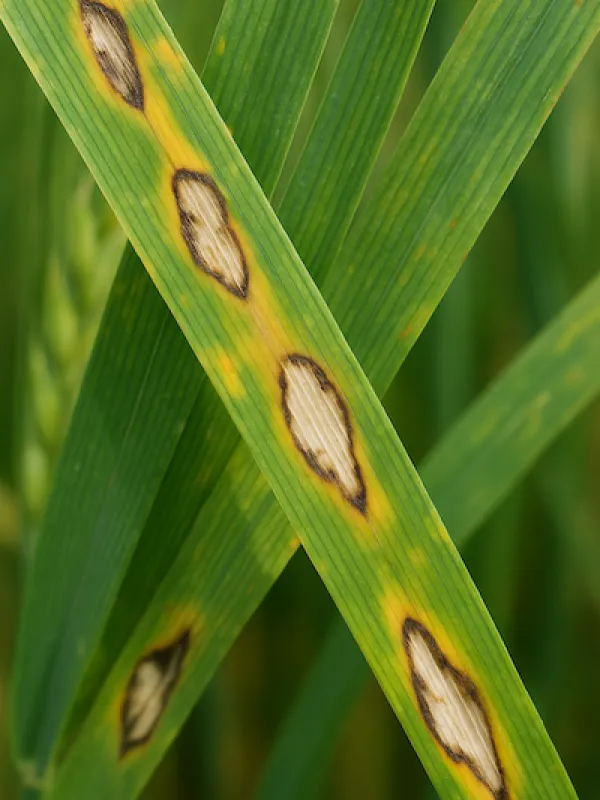
Description
How to identify
Bipolaris is a genus of fungi within the Pleosporales order, known for causing various helminthosporium diseases in plants. These fungi are globally distributed and act as significant agricultural pathogens.
The mycelium of Bipolaris is typically dark-pigmented and septate. The most distinctive feature of this genus is its conidia, which are large, multicellular, and spindle-shaped, capable of germinating from both ends, a trait known as bipolar germination.
These fungi occupy a range of ecological niches, often acting as saprotrophs on decaying organic matter before transitioning into plant pathogens. They are highly adaptable to environmental stressors.
The fungal life cycle involves asexual reproduction through conidia. These spores are disseminated by wind, rain splashes, and movement of contaminated soil or seeds, allowing for rapid colonization of host plants.
Taxonomically, Bipolaris belongs to the Ascomycota division. Many species, such as Bipolaris sorokiniana, are well-documented for their ability to compromise the structural integrity of crops and cause significant yield loss.
What it damages
Bipolaris species have a broad host range, primarily targeting members of the Poaceae family. Important affected crops include wheat, barley, maize, rice, and several types of forage grasses.
The damage often begins with seedling blight, where infected seeds fail to produce healthy plants, leading to poor crop stands. This early-stage impact is a major factor in yield reduction.
On leaves, the pathogen causes characteristic necrotic spots, ranging from small brown lesions to large, irregular blotches. Severe infection can lead to leaf senescence and a significant reduction in photosynthetic capacity.
When the pathogen attacks the grain heads, it causes head blight or 'black point' on the kernels. This directly lowers the market quality of the grain and can lead to the production of mycotoxins, making the harvest unsafe for consumption.
The cumulative damage includes stunted plant growth, lodging, and reduced thousand-kernel weight. In severe cases of infestation, the yield losses can exceed half of the expected production.
When it appears
Primary infection typically occurs in the early spring, when the fungus is introduced via contaminated seeds or survives in crop residues from previous seasons. Seedlings are most vulnerable during this time.
The disease flourishes throughout the growing season, particularly under warm and humid conditions. High relative humidity and temperatures ranging from 20°C to 28°C create an ideal environment for rapid conidial development.
Secondary infections occur continuously throughout the summer. Wind and water splashes facilitate the spread of spores from lower leaves to the upper canopy of the crop as the season progresses.
The pathogen overwinters as mycelium and conidia in soil, on crop stubble, and within the embryo of seeds. This high level of persistence ensures the disease's presence in a field for years if not managed correctly.
Monitoring for the disease is essential during critical crop development stages like tillering and heading. Early detection of leaf spotting is crucial to prevent the infection from reaching the grain heads.
Control measures
The first line of defense is the use of high-quality, certified, and disease-free seeds. Seed treatment with systemic fungicides is highly recommended to protect germinating seeds from soil-borne and seed-borne inoculum.
Cultural practices, such as crop rotation, are vital for reducing Bipolaris pressure. Rotating away from susceptible cereal hosts for at least three seasons helps deplete the fungal population in the soil.
Managing crop residue through tillage or deep plowing encourages the breakdown of stubble, which is a primary reservoir for the pathogen. Proper weed management also removes alternative hosts for the fungus.
Foliar fungicide applications are used to suppress the disease during the peak growing season. Timing applications to coincide with the flag-leaf stage or early heading provides the most effective protection against yield loss.
Breeding for resistant or tolerant cultivars remains the most sustainable long-term strategy for managing Bipolaris. Integrated Pest Management (IPM) programs that combine resistant varieties with balanced fertilization show the best results in field conditions.
Causes diseases · 1
Discussion
No discussions yet — be the first.