
Description
Symptoms
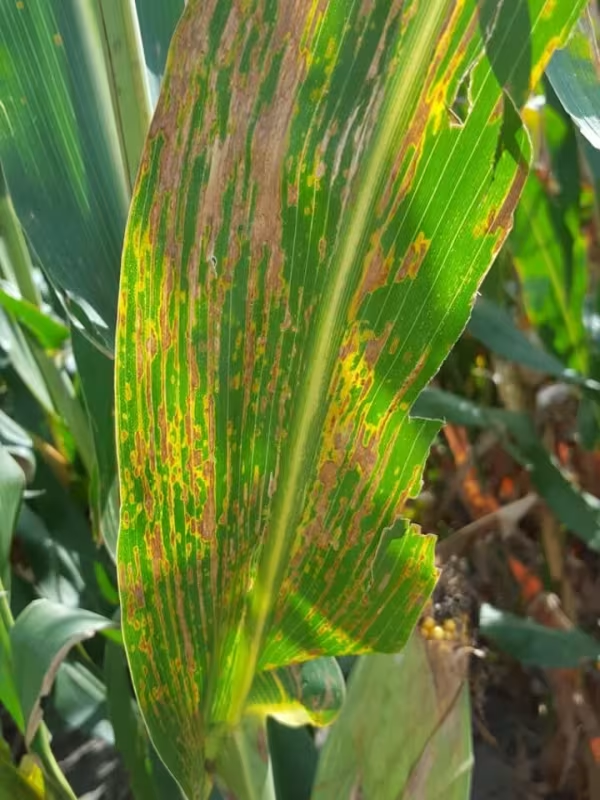
The initial symptoms are narrow, water-soaked streaks that develop along the leaf veins. Over time, these streaks become necrotic, turning brown, reddish-brown, or yellow, often stretching the length of the leaf.
Under high humidity, a characteristic bacterial ooze may be visible on the surface of the lesions. Once the ooze dries, it leaves a thin, crusty residue, which is a key diagnostic feature for field identification.
Disease development usually progresses from the lower leaves upward. In severe cases, extensive necrosis occurs, giving the foliage a scorched or burned appearance, hence the name of the disease.
In corn and sorghum, the disease can affect the husks and floral structures, leading to stunted growth and reduced seed set. In severe outbreaks, the entire plant canopy can wither prematurely.
Because these symptoms can overlap with fungal leaf spots or other bacterial diseases, accurate diagnosis often requires laboratory confirmation through molecular tools like PCR.
Pathogen
The causal agent of bacterial leaf streak is the Gram-negative bacterium Xanthomonas vasicola. It is a highly specialized pathogen that invades the vascular system and parenchyma of various graminaceous plants.
The bacteria can survive in crop debris, infested seeds, and alternative wild grass hosts. Due to its potential for rapid spread and crop damage, it is treated as a significant quarantine threat in many agricultural sectors.
Infection occurs via natural openings such as stomata or through physical wounds caused by environmental factors or mechanical activity. Once inside, the pathogen colonizes the intercellular spaces, secreting enzymes that break down plant tissues.
The pathogen shows genetic diversity, with different strains showing varying levels of virulence across different host plants, including rice and sugarcane-related species.
Continuous monitoring of pathogen evolution is essential, as the bacterium can adapt to different environmental conditions and bypass some conventional plant resistance traits over time.
Conditions for development
The development of bacterial leaf streak is favored by warm temperatures, typically between 25°C and 30°C, combined with high relative humidity. Regular rainfall and high moisture are crucial for the movement of bacteria from plant to plant.
Wind-driven rain and hailstorms play a major role in the dissemination of the pathogen, as they create mechanical wounds on the leaves, facilitating entry points for the bacteria.
Poor crop rotation practices and the presence of infested crop residues on the soil surface provide the bacteria with a long-term survival strategy between growing seasons.
The use of contaminated seed lots is considered the primary means of long-distance spread. The bacteria can remain viable within the seed for many months, allowing the disease to emerge in previously uninfected areas.
Heavy nitrogen fertilization can exacerbate the problem by promoting lush, succulent growth that is more susceptible to bacterial penetration and colonization.
Why it matters
The primary economic impact stems from the reduction of the leaf surface area available for photosynthesis. This leads to diminished grain filling and significant yield losses in both grain and silage production.
Yield losses can vary greatly depending on the timing of the infection and environmental conditions, ranging from moderate losses to nearly 50% in highly susceptible hybrid varieties.
Quality issues, such as smaller grain size, reduced test weight, and potentially secondary infections by opportunistic fungi, further decrease the value of the harvested crop.
The disease poses significant trade and regulatory challenges. Exporting grain from affected regions can lead to strict quarantine regulations and trade barriers, complicating market access.
Producers face rising costs associated with intensive crop management, including the need for seed certification, specialized cleaning of harvesting equipment, and the adoption of more expensive resistant varieties.
Protection
The most effective strategy is the use of high-quality, certified pathogen-free seeds. Planting resistant or tolerant hybrids is the cornerstone of an integrated management program for this disease.
Strict crop rotation, rotating away from susceptible hosts like corn or sorghum for at least two to three years, helps to reduce the primary inoculum load in the field soil.
Effective sanitation, including the incorporation or destruction of crop residues immediately after harvest, significantly lowers the potential for bacterial survival through the winter.
Minimizing plant stress and injury during the growing season is important. Proper management of insect pests that may cause damage or facilitate bacterial spread is also recommended.
While chemical control with copper-based bactericides has been attempted in some contexts, its effectiveness is often limited to preventative use and does not provide total cure once the infection is established.
Pathogens and affected parts
Affects crops · 4
Discussion
No discussions yet — be the first.