
Solanum stolbur phytoplasma
Stolbur phytoplasma
Description
How to identify
The causal agent is the phytoplasma Candidatus Phytoplasma solani (16SrXII-A group). It is a specialized obligate parasite that colonizes the plant phloem and lacks a cell wall. It belongs to the class Mollicutes.
In nature, the pathogen persists in the roots of perennial weeds such as field bindweed (Convolvulus arvensis), thistles, and sow thistles, which serve as reservoirs during the off-season.
The primary vector for the transmission of stolbur is the leafhopper Hyalesthes obsoletus. The transmission is persistent; once an insect feeds on an infected plant, it remains a carrier of the phytoplasma for its entire lifespan.
The phytoplasma is not transmitted mechanically through agricultural practices or via seeds. The spread relies almost exclusively on the migration of infected insect vectors from weed hosts to cultivated fields.
Laboratory diagnosis is performed using PCR or Real-time PCR assays, which are highly sensitive and capable of detecting the phytoplasma DNA within plant tissues.
What it damages
The disease affects a wide range of crops in the Solanaceae family, including tomatoes, peppers, eggplants, and potatoes, as well as various vegetable and technical crops.
Economic damage is most severe in southern regions, where favorable climatic conditions support large leafhopper populations and early-season field infestation.
Yield losses in tomatoes can range from 50% to 90%. Fruits become small, woody, lose their marketability and flavor, and are often completely unsuitable for consumption.
Severe infection in potatoes leads to tuber degeneration: when infected tubers are planted, they produce weak, thread-like sprouts that fail to yield a crop.
Beyond Solanaceae, the phytoplasma can infect grapevines (causing "bois noir" or yellowing disease), carrots, and various ornamental plants, broadening its host range significantly.
When it appears
Infection occurs during the peak migration period of leafhoppers, typically from May to June. The activity of vectors coincides with the flowering and fruit-setting stages of the host plants.
In hot and dry years, the incidence of the disease increases significantly, as the drying out of weed reservoirs forces leafhoppers to migrate to irrigated crop fields.
The incubation period of the disease ranges from 2 to 4 weeks, depending on air temperature and the physiological stage of the plant at the time of infection.
Active growth phases are the most vulnerable times, as the phytoplasma moves rapidly through the phloem, leading to systemic infection of the entire plant organism.
By the end of the season, symptoms become highly pronounced, but at this stage, the plant has already suffered extensive physiological damage and productivity loss.
Signs of infestation
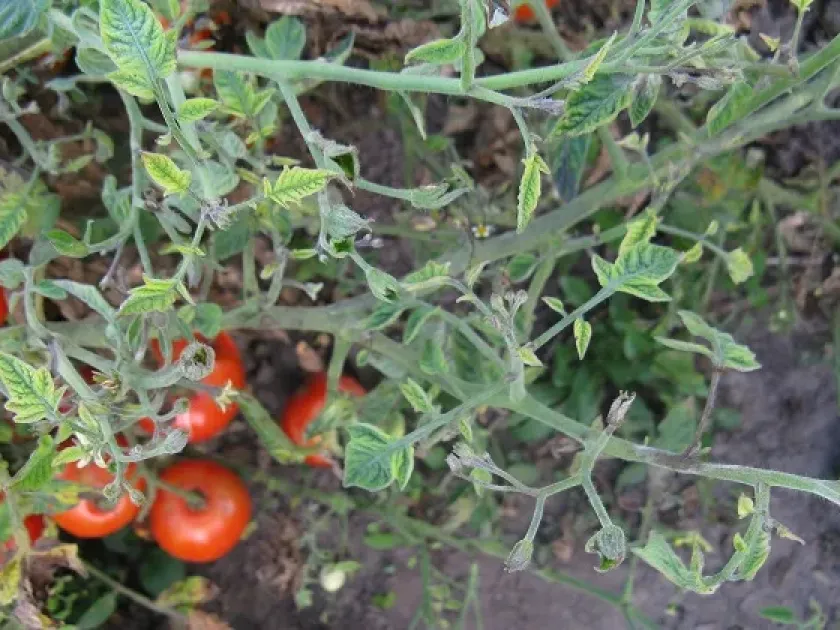
Early symptoms appear on the apical shoots: leaves become smaller, curl, and develop chlorotic or reddish-purple discoloration, with margins curling upward.
Flowers undergo pathological changes: petals often turn green, fuse together, and become underdeveloped, while reproductive organs deform, rendering fertilization impossible.
In tomatoes, fruit "stolburization" is common: the fruits are hard, tasteless, have poor internal coloration, and lack viable seeds.
Root systems of infected plants eventually turn brown and decay, leading to stunted growth and rapid wilting under water stress.
- Reduced leaf size.
- Greenish petals.
- Floral deformation.
- Apical leaf reddening.
- Hard, unpalatable fruits.
Control measures
The primary control measure is the eradication of weed reservoirs (such as field bindweed and thistles) on fields and adjacent areas to eliminate leafhopper breeding grounds.
Applying insecticides during the peak flight and migration of leafhoppers is essential to reduce the risk of primary infection in the crop.
The use of resistant or tolerant cultivars and hybrids of tomatoes and potatoes helps mitigate losses when exposure to vectors cannot be fully prevented.
Maintaining spatial isolation between Solanaceous crops and perennial grassy areas helps prevent the migration of infected vectors into the fields.
When cultivating potatoes, it is critical to use certified virus-free seed material obtained from specialized nurseries to prevent the introduction of the pathogen.
Causes diseases · 1
Discussion
No discussions yet — be the first.