
Phytoplasma
Phytoplasma suspected
Description
How to identify
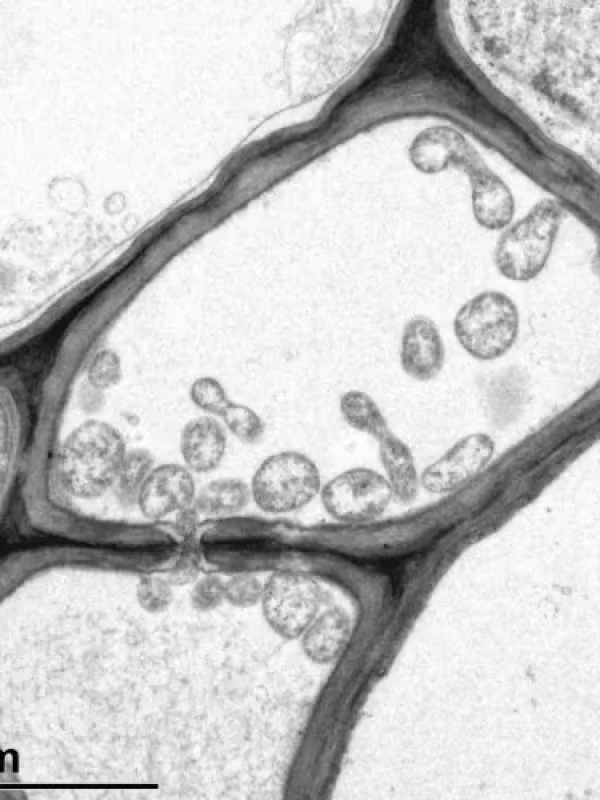
Phytoplasmas are specialized, wall-less prokaryotic organisms belonging to the class Mollicutes. As obligate parasites, they reside exclusively in the phloem tissue of their host plants, which limits their interaction with other plant tissues.
These pathogens are transmitted by sap-sucking insects, primarily leafhoppers, planthoppers, and psyllids. During the feeding process, the insect acquires the phytoplasmas, which then multiply within the insect's body before being transmitted to subsequent healthy hosts.
Phytoplasmas are characterized by their small genome size and lack of a cell wall, making them highly sensitive to physical environmental changes but resilient within the sheltered environment of the phloem sieve tubes.
Detection of these pathogens is challenging due to the lack of culturing methods. Diagnosis is performed using molecular techniques, primarily PCR (Polymerase Chain Reaction) and RT-PCR, which are essential for confirming the presence of the pathogen in plant or insect samples.
Phytoplasmas are grouped into various 16Sr groups based on their DNA sequences. This classification helps agronomists and researchers predict potential host ranges and develop specific management protocols for different geographical regions.
What it damages
Phytoplasmas cause severe diseases in a wide range of economically important crops, including solanaceous vegetables (tomatoes, potatoes), grapes, fruit trees, and various ornamental plants. The resulting diseases are often collectively referred to as "yellows" or "witches' broom" diseases.
The economic impact of phytoplasma infection is significant, often resulting in total crop failure. Infected plants exhibit systemic growth disruption, as the pathogen interferes with the translocation of nutrients and photosynthates throughout the plant.
In vineyards, phytoplasma diseases like Flavescence dorée can cause massive loss of yield, plant decline, and potential death of entire vineyard blocks. This requires expensive eradication programs and strict quarantine measures.
Beyond yield reduction, the quality of agricultural produce is severely compromised. Symptoms such as fruit deformation, loss of sugar content, and shriveling make produce unmarketable, leading to substantial financial losses for growers.
The persistence of the pathogen in perennial weeds and nursery stocks makes it difficult to eradicate once it is established in an area. Infected nursery material is the primary vehicle for long-distance dissemination of the disease.
Signs of infestation
A hallmark symptom of phytoplasma infection is the proliferation of shoots, known as "witches' broom." This occurs because the pathogen disrupts the hormonal balance, leading to the loss of apical dominance and excessive axillary bud growth.
Phyllody, the transformation of floral organs into green, leaf-like structures, is a characteristic sign of many phytoplasma-induced diseases. This results in complete sterility of the flowers, as reproductive organs fail to develop properly.
Other common symptoms include stunting of the entire plant, yellowing (chlorosis) or reddening of leaves, and the rolling of leaves, often in a boat-shaped manner. The root system may also become stunted or excessively branched.
- General dwarfing and reduced leaf size.
- Premature leaf drop and necrosis.
- Virescence (greening of petals).
- Interveinal yellowing of foliage.
- Failure to produce fruit or seed.
Symptoms are often more prominent during warm, active growing seasons, which coincide with the high activity of insect vectors and increased sap flow within the host plant.
Control measures
Management of phytoplasma diseases relies heavily on an integrated pest management (IPM) approach, as there are no direct chemical treatments available to cure an infected plant in the field.
Controlling insect vectors is the most critical step. Regular monitoring and application of systemic insecticides can significantly reduce vector populations and minimize the transmission of the pathogen to healthy crops.
Sanitation practices, such as the rapid removal and destruction of symptomatic plants, are vital to eliminate the inoculum source. Furthermore, clearing nearby weeds that serve as alternative hosts is necessary to maintain a disease-free environment.
The use of certified, disease-free propagation material is the first line of defense. Nursery protocols should include insect-proof netting to prevent vector entry and regular testing of stock plants for phytoplasmas.
Developing and planting resistant or tolerant cultivars is a long-term goal for many crops. While full resistance is rare, selecting varieties that are less attractive to vectors or possess higher tolerance to the pathogen can mitigate the severity of outbreaks.
Causes diseases · 1
Discussion
No discussions yet — be the first.