
Description
Pathogen
The disease is caused by Stolbur phytoplasma, a specialized plant pathogen that resides within the phloem tissues of its host plants.
Phytoplasmas lack cell walls and rely entirely on phloem sap, disrupting the normal transport of nutrients and sugars throughout the plant vascular system.
Transmission occurs through insect vectors, primarily leafhoppers (e.g., Hyalesthes obsoletus), which acquire the pathogen while feeding on infected weeds or crops.
After a latent period within the insect, the leafhopper becomes a permanent vector, transmitting the phytoplasma to healthy maize plants during feeding.
The pathogen is systemic, spreading throughout the plant and leading to long-term physiological stress and severe metabolic disruption.
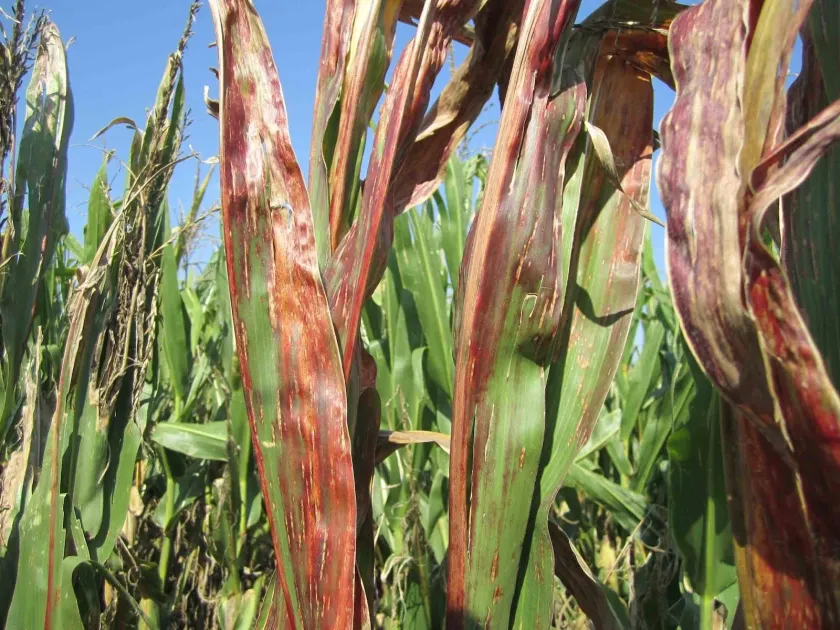
##signs##The primary symptom is the distinctive reddening of the leaves, which often progresses from the leaf margins and tips towards the base of the plant.
Infected plants frequently display dwarfism, with shortened internodes and stiff, narrow leaves that alter the overall structural integrity of the crop.
Ear development is heavily impaired, resulting in small, malformed cobs with significant gaps or complete absence of kernels.
Cross-sections of the stalk often reveal necrosis of the vascular bundles, confirming the pathogen's impact on the plant's internal transport system.
Symptoms also include premature wilting and drying, as the plant struggles to move water and nutrients to its upper parts and developing reproductive organs.
##conditions##Maize reddening typically thrives in hot and dry weather conditions, which favor the movement and rapid multiplication of leafhopper populations.
Field margins adjacent to abandoned land, roadsides, or non-cultivated areas act as hotspots for the disease due to the presence of reservoir weeds.
Common weeds, especially species from the Solanaceae family, harbor the phytoplasma during the winter and serve as the source of primary infestation for the maize crop.
High population densities of vectors during the early stages of maize development lead to the most significant outbreaks and severe yield losses.
Environmental stress, combined with the presence of multiple reservoir hosts, creates a landscape where the disease can easily jump into agricultural fields.
##harm##The disease causes significant economic loss by drastically reducing grain yield and overall plant biomass in infected areas.
Kernels that do form on infected ears are often shriveled or poor in quality, making them unsuitable for storage or standard commercial use.
The loss of photosynthetic efficiency due to leaf reddening and vascular damage prevents the plant from reaching its full potential yield.
Infection compromises the plant's health, making it increasingly susceptible to opportunistic fungal infections, which further degrade the harvest quality.
When incidence rates are high, large sections of a field may become unproductive, requiring significant labor and cost to mitigate the impact.
##control##Effective management focuses on disrupting the disease cycle by targeting the insect vectors and removing reservoir weed hosts near the fields.
Consistent weed control, particularly of perennial species that act as phytoplasma reservoirs, is essential throughout the growing season.
Strategic application of insecticides during peak leafhopper activity is crucial to reduce the spread of the pathogen within the maize crop.
Maintaining clear field borders and managing surrounding vegetation can significantly reduce the pressure of insect migration into the maize plots.
- Utilizing systemic insecticide seed treatments.
- Regular monitoring of vector populations with traps.
- Maintaining proper crop rotation to break the disease cycle.
- Removing symptomatic plants to minimize secondary spread.
Pathogens and affected parts
Affects crops · 1
Discussion
No discussions yet — be the first.