
Corn stunt spiroplasma
Spiroplasma kunkelii
Description
How to identify
Corn stunt spiroplasma (Spiroplasma kunkelii) is a highly specialized plant pathogen belonging to the Mollicutes class. As a member of the Spiroplasmataceae family, it lacks a cell wall, rendering it obligately dependent on either its plant host or its insect vector for survival.
The pathogen is strictly phloem-limited, meaning it resides and multiplies within the plant's vascular tissue. Its primary transmission vector is the corn leafhopper, Dalbulus maidis, which is essential for the pathogen's lifecycle and dispersal.
The spiroplasma cannot survive independently in the soil or on crop debris, establishing its reliance on continuous cycles of infection within living host plants or the body of the insect vector.
Accurate identification is difficult in the field due to the lack of macroscopic symptoms until the disease has progressed significantly. Molecular diagnostic tools, such as PCR and ELISA, are required for definitive identification of the pathogen.
Biologically, Spiroplasma kunkelii exhibits helical morphology and is capable of motility, which facilitates its movement through the phloem sieve tubes of the host plant after being introduced by a feeding leafhopper.
What it damages
The primary host of Spiroplasma kunkelii is maize (Zea mays). The pathogen causes a systemic disease commonly referred to as Corn Stunt, which significantly impairs the plant's growth and productivity.
By infecting the phloem, the pathogen disrupts the transport of photoassimilates, starving the developing parts of the plant and preventing proper ear formation and kernel fill.
While maize is the main host, the pathogen can also persist in certain wild grass species, which serve as alternate reservoirs for the spiroplasma in the absence of the primary crop.
Early-season infections are particularly devastating, as they result in severe stunting, leaf discoloration, and total yield failure, making it a major economic concern in corn-growing regions.
In addition to yield loss, the infected plants often exhibit reduced vigor, becoming more susceptible to opportunistic fungal infections and environmental stressors.
When it appears
The disease prevalence is closely linked to the population dynamics of the corn leafhopper. Outbreaks typically occur when high populations of the vector coincide with the early vegetative stages of the corn crop.
Warm temperatures and favorable moisture levels promote the breeding of the insect vector and the rapid replication of the spiroplasma within both the plant and the insect, accelerating the spread of the disease.
Symptom expression usually lags behind the initial infection by several weeks, often becoming apparent during the knee-high or silking stages, which complicates management decisions.
In warmer climates, the disease may occur throughout the growing season, with the potential for multiple infection cycles as new leafhopper generations migrate across the fields.
In regions with mild winters, the pathogen persists within the leafhopper population, providing an immediate source of inoculum for the next crop season as soon as the first corn seedlings emerge.
Signs of infestation
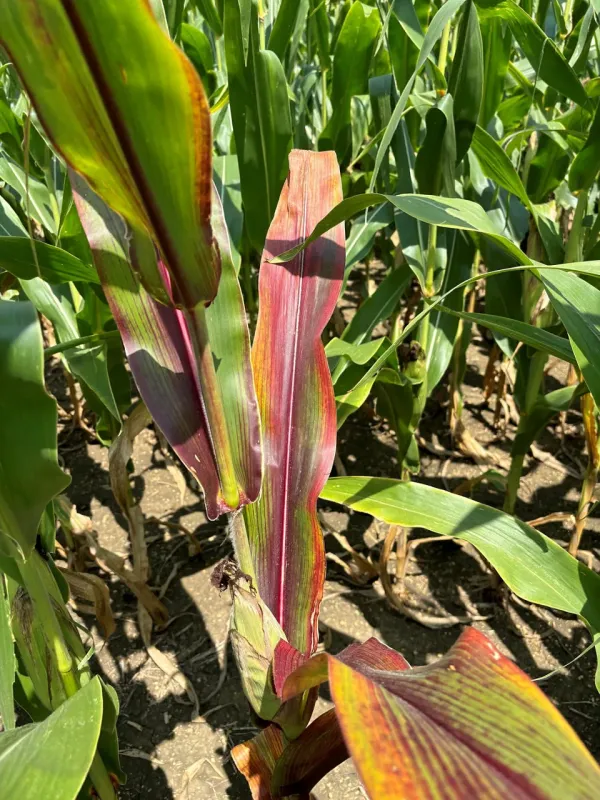
The most distinctive symptom of corn stunt is stunted growth, characterized by shortened internodes that result in a compact and dwarfed plant appearance.
Leaves often display an abnormal color palette, ranging from pale yellow to reddish-purple, starting from the leaf margins, which is a classic indicator of disturbed sugar transport.
Infected plants frequently exhibit excessive tillering or "bunchy" growth at the base, where axillary buds sprout abnormally due to the loss of apical dominance.
- Yellowing or reddening of the upper leaves.
- Severe internode shortening.
- Poorly developed, sterile tassels.
- Small, misshapen, or completely barren ears.
Plants affected by the spiroplasma often senesce prematurely and are prone to secondary pathogens, significantly reducing the quality of any harvested biomass.
Control measures
The most effective strategy for managing corn stunt is the control of the leafhopper vector, Dalbulus maidis, using systemic insecticides applied during the early stages of crop growth.
Cultural practices, such as implementing host-free periods and avoiding staggered planting dates in the same vicinity, help disrupt the transmission cycle and reduce the exposure of young corn to the pathogen.
The use of resistant or tolerant corn hybrids is highly recommended in endemic areas, as this provides a foundational layer of protection against the pathogen even when vectors are present.
Sanitation efforts, including the control of grassy weeds within and around fields, are crucial to eliminate the reservoirs that support the leafhopper population and the spiroplasma itself.
Regular monitoring using yellow sticky cards allows farmers to track leafhopper activity levels, ensuring that insecticide applications are timed correctly for maximum protection.
Causes diseases · 1
Discussion
No discussions yet — be the first.