
Spiroplasma citri
Spiroplasma citri
Description
How to identify
Spiroplasma citri is a helical, wall-less bacterium belonging to the class Mollicutes. This phytopathogen inhabits the phloem tissue of infected plants and is known as the causative agent of the economically damaging "stubborn disease" in citrus.
The organism is characterized by its unique spiral morphology and motility, which allows it to navigate within the sieve tubes of the plant host's vascular system.
Transmission occurs primarily through the phloem-feeding leafhopper Circulifer tenellus. The pathogen multiplies within the insect's gut and salivary glands before being injected into the host plant during feeding.
Because the pathogen lacks a cell wall, it is resistant to common antibiotics like penicillin. Detection is routinely performed using molecular techniques such as PCR and ELISA to differentiate it from other phloem-limited diseases.
The pathogen is systemic, meaning it spreads throughout the entire vascular network of the plant, often causing long-term, irreversible damage to the host's physiological functions.
What it damages
The primary hosts of Spiroplasma citri are citrus species, including sweet orange, grapefruit, and mandarin. The severity of the symptoms varies depending on the cultivar and the environmental conditions.
Beyond citrus, the pathogen has a wide host range, infecting various weeds and crops like horseradish and periwinkle, which act as reservoirs and facilitate the persistence of the disease.
The disease causes significant economic loss due to reduced yields, poor fruit quality, and the necessity of removing infected, non-productive trees from orchards.
Physiologically, the blockage of phloem vessels restricts the transport of nutrients, leading to stunted growth, reduced root development, and an overall decrease in the plant's vigor.
Infected trees become less resilient to other environmental stresses, such as drought or secondary fungal infections, which further complicates the health of the orchard.
Signs of infestation
The characteristic "stubborn" symptoms include stunted growth, shortened internodes, and an excessively branched, bushy appearance of the tree canopy.
Fruit symptoms are highly distinctive: fruits are typically small (microcarpy), often asymmetric, and may have a bitter or sour flavor that renders them unmarketable.
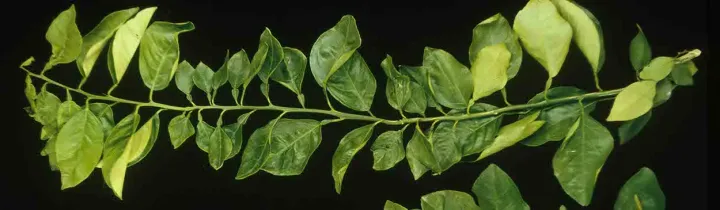
Leaves on infected branches often show mottling, chlorosis, and reduced size. A common sign is the "acorn" shape of the fruit, where the stylar end remains green or becomes depressed.
Inconsistent fruit maturity is another key marker, as fruits on a single tree may exhibit different stages of coloration, with some remaining partially green despite being ripe.
Over time, the tree canopy may experience dieback, leading to a thin and ragged appearance, eventually resulting in the tree becoming completely unproductive.
Control measures
The most critical control measure is the use of pathogen-free, certified nursery stock to prevent the introduction of the bacteria into new plantations.
Managing the leafhopper populations through the application of systemic and contact insecticides can help reduce the rate of new infections within an orchard.
Rogueing or the removal of infected, symptomatic trees is necessary to minimize the source of inoculum and protect the remaining healthy portion of the plantation.
Orchard management should focus on weed control, specifically targeting hosts that provide shelter and food for leafhopper vectors throughout the season.
Currently, there is no chemical cure for Spiroplasma citri; therefore, preventive phytosanitary measures remain the gold standard for management and containment.
Causes diseases · 1
Discussion
No discussions yet — be the first.