
Description
Symptoms
The disease is characterized by severe stunting, giving the tree a bushy, stunted appearance often referred to as "witches' broom." Branches may show erratic growth patterns and a shortened internode distance.
Fruit symptoms are diagnostic: they are often small, asymmetrical, and lopsided. A premature fruit drop is a common occurrence, significantly impacting total yield during the harvest season.
Internally, affected fruits exhibit a darkened, necrotic central axis, and the juice sacs may be dry or have a bitter or unpalatable taste. This renders the produce unfit for both fresh consumption and processing.
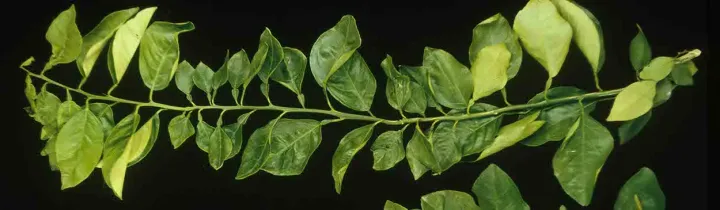
Leaves on infected branches are often smaller, show signs of chlorosis, and may exhibit upward cupping. These symptoms can be patchy, affecting only certain parts of the canopy while leaving other areas seemingly unaffected.
As the infection becomes systemic, the tree shows a steady decline in vigor, eventually leading to a complete lack of commercial productivity over time.
Pathogen
Citrus stubborn disease is caused by Spiroplasma citri, a phloem-limited, wall-less bacterium belonging to the Mollicutes class. Its helical shape allows it to move efficiently through the plant's vascular system, causing significant physiological disruptions.
The disease affects a wide range of citrus varieties, including sweet oranges, grapefruits, and mandarins. By colonizing the phloem tissue, the pathogen impairs the transport of nutrients, leading to stunted development.
The pathogen is primarily transmitted by leafhopper vectors, most notably the beet leafhopper, Circulifer tenellus. Once a leafhopper feeds on an infected tree, it becomes a carrier and can spread the disease for the rest of its lifespan.
In addition to insect vectors, the disease is disseminated through contaminated budwood used for grafting. This highlights the critical need for strict quarantine and certification protocols in citrus nursery operations.
The biology of Spiroplasma citri involves a complex cycle of multiplication within both plant host tissues and the insect vector, making it a persistent and challenging pathogen for citrus growers worldwide.
Conditions for development
The development of Spiroplasma citri is strongly correlated with high-temperature environments. The pathogen thrives and multiplies most rapidly in hot, arid conditions, which are also favorable for the activity of its insect vectors.
During hot summer months, leafhoppers are prone to migrating from drought-stressed weeds onto irrigated citrus orchards. This influx of vectors is a primary cause of new infection outbreaks within a grove.
Many common weeds found in and around citrus orchards serve as reservoirs for the pathogen. These plants often harbor the bacteria without showing obvious symptoms, acting as a bridge for the disease to reach the trees.
Geographic spread is currently limited to regions where temperatures allow the pathogen and the leafhopper populations to survive throughout the year. Changes in climate patterns may lead to the disease appearing in new geographical areas.
Poor orchard management, including lax weed control and neglect of insect populations, drastically increases the susceptibility of a grove to stubborn disease infection.
Why it matters
Citrus stubborn disease causes severe economic damage, as affected trees cannot be cured and remain unproductive. The primary loss stems from the significant reduction in marketable fruit quality and volume.
In newly planted groves, the disease can lead to total orchard failure if infected trees are not promptly identified and removed, forcing growers to restart the entire planting process.
The long latent period between initial infection and the expression of visible symptoms makes this disease particularly insidious. Growers may unknowingly propagate the pathogen before the first symptoms ever appear.
Increased operational costs related to vector monitoring and chemical control add to the financial burden of managing an orchard in regions where the disease is endemic.
Ultimately, the loss of tree longevity and yield stability threatens the profitability of citrus farming, making early detection and prevention strategies the cornerstones of successful grove management.
Protection
The cornerstone of disease management is the use of healthy, pathogen-free nursery stock. Only certified, heat-treated plants should be used for establishing new citrus plantations.
Effective insect control is essential to reduce the transmission rate. Regular applications of systemic insecticides targeting leafhopper populations can limit the spread within a grove.
Maintaining a clean orchard floor by aggressively managing weed populations reduces the available reservoir hosts for both the bacteria and the insect vectors, effectively lowering the overall infection pressure.
- Rigorous visual inspection of all trees.
- Immediate removal and destruction of symptomatic trees.
- Monitoring leafhopper populations using yellow sticky traps.
- Strict adherence to budwood certification programs.
Long-term protection relies on continuous vigilance, rapid response to localized outbreaks, and the development of resistant rootstocks or varieties through advanced breeding programs.
Pathogens and affected parts
Affects crops · 1
Discussion
No discussions yet — be the first.