
Shallot virus
Shallot virus
Description
How to identify
The Shallot virus (genus Potyvirus, family Potyviridae) is an obligate intracellular phytopathogen. It consists of small filamentous particles that cannot survive outside the host plant or its insect vector.
This virus is systemic, meaning it colonizes all parts of the host plant including the bulbs. Transmission occurs primarily through vectors like aphids or via vegetative propagation of infected bulbs.
Because the virus remains latent in the bulb tissues, it is easily spread when farmers replant infected material, leading to chronic infections over consecutive seasons.
Diagnostic identification is achieved through laboratory techniques, specifically ELISA (Enzyme-Linked Immunosorbent Assay) and RT-PCR, which detect viral RNA or proteins in plant tissue.
The virus often occurs in mixed infections alongside other viral agents such as the Onion yellow dwarf virus, which complicates diagnosis and intensifies the overall damage to the crop.
What it damages
The primary hosts of the Shallot virus are members of the Allium genus, including shallots, onions, garlic, and leeks.
The infection results in significant yield reduction, characterized by the formation of small, underdeveloped bulbs that lack commercial value and have poor storage longevity.
Large-scale outbreaks can decimate entire fields, leading to sparse plant stands and significant economic losses for agricultural producers.
Viral infection weakens the physiological state of the plants, making them more susceptible to secondary fungal and bacterial pathogens that further degrade harvest quality.
Infected seeds or bulbils often show low germination rates and produce stunted, weak seedlings that fail to mature into healthy, productive plants.
Signs of infestation
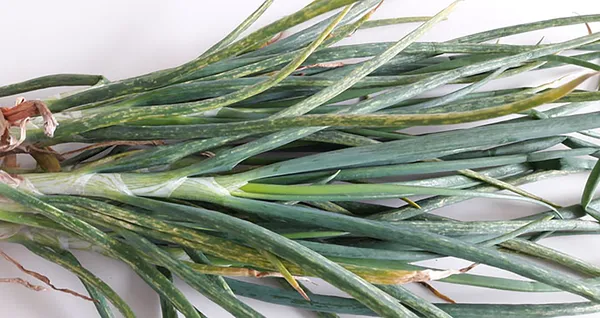
The most prominent symptom is the development of a mosaic pattern on the leaves, appearing as alternating light and dark green stripes or patches.
Infected plants often exhibit leaf deformation, curling, and a significant reduction in growth rate compared to healthy crops.
Symptoms of yellow dwarfism are frequently observed, where the leaves turn yellow prematurely, become limp, and fall over, halting the plant's growth process.
Plants affected by the virus appear generally depressed, losing their vigor and showing thinner, weaker foliage that stands out in a healthy crop field.
- Mosaic patterns on leaves
- Deformation and curling of foliage
- Stunted plant growth
- Premature yellowing and collapse
- Reduced bulb size and quality
Control measures
The primary strategy for control is the use of high-quality, virus-free planting material derived from tissue culture or certified disease-free programs.
Management of insect vectors, particularly aphids, is essential. Timely application of systemic insecticides can significantly reduce the secondary spread of the virus within a field.
Spatial isolation of new onion fields from older or perennial Allium crops is crucial to prevent the introduction of the virus by migratory insect populations.
Regular phytosanitary roguing must be practiced, where infected plants are physically removed and destroyed to limit the reservoir of the virus in the field.
Implementing crop rotation and controlling weeds that act as alternative hosts for the virus between seasons are key practices in minimizing the prevalence of this pathogen.
Causes diseases · 1
Discussion
No discussions yet — be the first.