
Grapevine virus
Grapevine virus
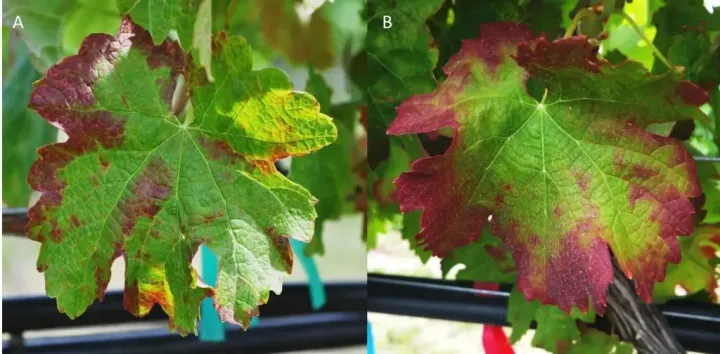
Description
How to identify
Grapevine viruses comprise a range of infectious pathogens, including members of the Vitivirus genus and others like the leafroll-associated viruses. These viruses are RNA-based pathogens that infect the vine's vascular system, specifically the phloem tissues, disrupting the translocation of carbohydrates and essential nutrients.
These viruses are systematic in nature, meaning they spread throughout the entire plant once infected. They are primarily transmitted through vegetative propagation (grafted cuttings), contaminated pruning tools, and insect vectors such as mealybugs or soft scales. Because they are not soil-borne in the traditional sense, human activity remains the primary cause of long-distance spread.
Identifying these viruses is challenging because many symptoms remain latent or mimic nutrient deficiencies. Many vines can serve as asymptomatic carriers for years, acting as a reservoir of infection that constantly threatens neighboring healthy plants within the vineyard block.
Advanced diagnostic techniques are necessary for confirmation. Enzyme-Linked Immunosorbent Assay (ELISA) is frequently used for field screening, while Polymerase Chain Reaction (PCR) is utilized for more sensitive, specific detection of viral sequences in infected vine sap or wood tissues.
The biology of these viruses is characterized by their integration into the host plant's life cycle. Once a vine is infected, the viral particles persist in the perennial wood and roots, making the plant a lifelong host unless removed. There is no known curative treatment for infected vines.
##damage##Grapevine viruses affect all commercial Vitis species, significantly reducing the economic viability of viticulture. Infection causes long-term vineyard decline, which manifests in reduced vine vigor, shorter life spans of the vines, and overall loss of plantation productivity.
The immediate impact on harvest is substantial. Infected vines often suffer from poor berry set, uneven ripening, and reduced sugar accumulation. This results in grapes that fail to meet industry standards for quality winemaking or fresh market appearance.
In addition to yield loss, these viruses weaken the vine's structural integrity. Poor wood maturation is a common consequence, which leads to increased susceptibility to winter frost damage, effectively killing off parts of the canopy or the entire vine during cold seasons.
Grapevine viruses also trigger secondary problems, such as increased susceptibility to fungal diseases and drought. A compromised vascular system prevents the vine from effectively managing water stress, causing premature senescence of the foliage.
Economic damage is compounded by the necessity of replacing infected vines, which requires significant investment and leads to downtime in production. Large-scale infection often necessitates the complete replanting of entire vineyard blocks.
Signs of infestation
One of the primary visible signs is leaf discoloration. Depending on the virus and the grape variety, this may appear as interveinal chlorosis, mosaic patterns, or severe reddening in red-skinned varieties, where the veins often remain green.
Leaf curling or rolling is another hallmark symptom. Leaves may roll downwards, become brittle, and show signs of deformation. This rolling often starts in the lower canopy and progresses upwards as the season advances towards harvest.
Stunted growth is commonly observed, particularly in young or highly susceptible vines. Internodes become shortened, and the overall shoot elongation is inhibited, resulting in a bushy or abnormal growth habit that is clearly distinct from neighboring healthy vines.
Reproductive symptoms include poor fruit set and cluster development. Many clusters may remain undersized with berries of uneven size, a phenomenon often referred to as 'hen and chicken' or shelling, which drastically reduces harvest weight.
- Downward curling of leaves.
- Reddening or yellowing of leaves in late summer.
- Severe reduction in shoot length and internodes.
- Erratic and poor fruit ripening.
- High levels of flower and fruit drop.
Control measures
The cornerstone of control is the exclusive use of certified virus-free planting material. Growers must source vines from nurseries that utilize strict thermotherapy and meristem tissue culture to ensure the stock is free from known viral pathogens.
Sanitation is critical during vineyard maintenance. Pruning tools must be thoroughly disinfected with appropriate solutions between vines to prevent the mechanical transmission of viral sap from infected individuals to healthy plants.
Effective management of insect vectors is essential. Controlling mealybug and scale insect populations via integrated pest management (IPM) practices significantly lowers the rate of virus spread within an existing vineyard.
Once a vine is confirmed to be infected, the recommended procedure is to rogue the plant. This involves completely removing the vine, including its root system, to prevent it from serving as a source of further infection for the rest of the block.
While agronomic practices like optimal fertilization and moisture management help vines maintain vigor, they do not cure the virus. These practices are only useful for extending the productive life of a vine under low-pressure conditions until it can be replaced.
Discussion
No discussions yet — be the first.