
Garlic mosaic virus
Garlic virus
Description
How to identify
Garlic mosaic virus (GarMV) is a significant plant pathogen belonging to the genus Potyvirus within the Potyviridae family. As an obligate parasite, it lacks cellular structure and relies entirely on the host plant's genetic machinery for its replication.
Taxonomically, this is an RNA-based virus that systemically infects tissues. It is widely distributed across regions where garlic and other Allium species are cultivated, often appearing in complex infections with other garlic-infecting viruses, which complicates field diagnosis.
The virus persists within infected bulbs, ensuring its carry-over from one season to the next. This makes the selection of high-quality, virus-free planting material the most critical factor in managing the disease, as the infection is perennial within the bulbs.
In the field, the primary mode of transmission is through insect vectors. Various aphid species, which feed on the sap of infected plants, acquire the virus and efficiently transmit it to healthy individuals, leading to rapid spread across the field.
Mechanical transmission also plays a role in the dissemination of the virus. Handling plants, pruning, or performing tillage with contaminated tools can transfer the pathogen from infected to healthy plants, especially if sanitization protocols are ignored.
What it damages
Garlic is the primary host for the virus, though it can also infect onions and related decorative Allium species. Systemic infection leads to a decrease in the plant's metabolic efficiency, causing widespread developmental issues across the entire bulb and foliage.
Infected crops exhibit significant growth retardation. The reduction in photosynthetic surface area due to leaf damage directly correlates with smaller bulb sizes, leading to poor yield and reduced weight at harvest time compared to healthy plants.
The quality of the final product is severely compromised. Infected bulbs often exhibit deformation, uneven scaling, and poor structural integrity, which significantly lowers their market value and renders the crop unsuitable for long-term storage or high-end retail.
Over successive generations, the virus causes the degeneration of garlic varieties. Using infected cloves for replanting leads to an accumulation of viral titer, eventually causing a total crop failure as the vigor of the variety continuously declines.
Additionally, the virus compromises the plant's natural defenses, making the crop highly susceptible to secondary pathogens. Weakened tissues are easily colonized by fungal and bacterial species, further increasing post-harvest losses and reducing shelf life.
Signs of infestation
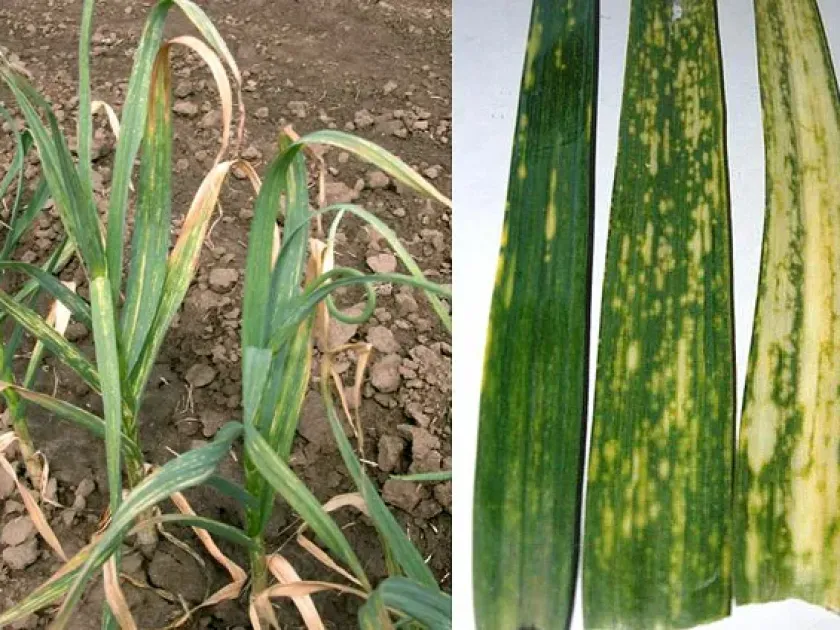
The most characteristic symptoms appear on the foliage as mosaic patterns, consisting of chlorotic spots, streaks, or stripes. These areas alternate between light green and yellow, indicating the breakdown of chlorophyll due to viral activity.
Stunting is a common sign of infection. Plants appear smaller than normal, with shortened internodes and deformed leaves that may appear curled, crinkled, or wavy, significantly impacting the aesthetic and physical health of the crop.
In severe cases, plants may exhibit severe mottling or even necrotic tissue patches on the leaves. As the disease progresses, the tips of the leaves often yellow and wither prematurely, which shortens the active vegetative phase of the plant.
Symptoms can sometimes be masked under optimal growing conditions, resulting in latent infections where the plant shows little to no external damage while still harboring and spreading the virus to surrounding healthy individuals.
Bulb symptoms are harder to spot visually but include reduced size, lack of uniformity, and sometimes abnormal development of the outer skin. In many cases, infected bulbs look relatively normal but are biologically inferior, harboring the pathogen for the next cycle.
Control measures
The foundation of effective management is the use of healthy, certified planting material. Sourcing cloves produced through meristem culture in specialized laboratories is the only reliable way to ensure the initial planting is free from the virus.
Vector control is essential for managing the spread within a farm. Implementing a consistent insecticide program targeting aphids throughout the growing season helps minimize the secondary transmission of the virus between plants.
Crop rotation and field hygiene are vital components of disease management. Avoiding garlic cultivation on the same plot for at least 3–4 years and keeping fields isolated from other Allium crops help break the infection cycle in the soil.
Sanitation of agricultural tools is a must. All cutting, planting, and harvesting equipment should be regularly disinfected with appropriate alcohol-based or antimicrobial solutions to prevent mechanical transfer of the virus across the plantation.
Prompt rogueing (removal) of infected plants is highly recommended. By identifying and destroying symptomatic plants, growers can reduce the local inoculum pressure, preventing the virus from spreading throughout the entire crop during the season.
Causes diseases · 1
Discussion
No discussions yet — be the first.