
Grapevine leafroll disease
Grapevine virus
Description
How to identify
Grapevine leafroll-associated virus (GLRaV) is a significant plant pathogen belonging to the Closteroviridae family, which primarily attacks the phloem tissue of the grapevine.
This virus is transmitted primarily through infected propagation material such as rootstocks and scions, as well as by insect vectors like mealybugs and scale insects.
Taxonomically, the virus is grouped within the genus Ampelovirus or Closterovirus. It interferes with the plant's vascular system, hindering the translocation of nutrients and sugars.
Once a vine is infected, the virus becomes systemic and resides in the plant permanently, making it a persistent source of infection for neighboring vines in the vineyard.
Detection in the early stages can be difficult due to asymptomatic periods; therefore, molecular diagnostic techniques like ELISA and PCR are standard for confirmation.
What it damages
The virus affects almost all cultivars of Vitis vinifera, causing severe physiological stress that impacts both the vegetative growth and the reproductive cycle of the vine.
Infected vines exhibit reduced photosynthesis and limited sugar accumulation in grapes, which directly affects wine quality, flavor profiles, and overall sugar content at harvest.
The cumulative damage leads to a significant reduction in yield, often causing a decrease of up to 50% in grape production compared to healthy, vigorous plants.
Virus-infected vines suffer from impaired winter hardiness and reduced drought tolerance, which frequently results in vine decline and the need for early replanting.
The economic impact is profound, as infected vineyard blocks become unproductive and require substantial investment in replacement and long-term phytosanitary management.
Signs of infestation
The most visible symptom is the downward curling of leaves, typically appearing in late summer, with leaves often becoming thickened and brittle as the season progresses.
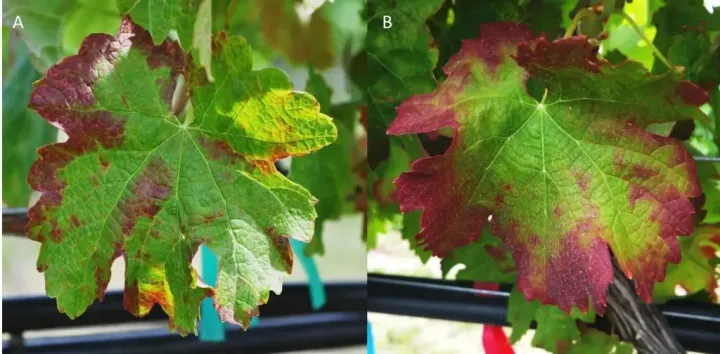
In red grape varieties, the leaves display a distinct reddening of the interveinal areas, while the primary veins remain green, creating a sharp color contrast.
In white grape varieties, the leaves show interveinal chlorosis, appearing pale yellow or lime-green, which can often be confused with nutritional deficiencies.
Grape clusters on infected vines often show delayed and uneven ripening, leading to smaller berries and lower juice quality, which is detrimental to commercial viticulture.
Overall vine architecture is weakened, characterized by shortened internodes, stunted shoot growth, and poor wood maturation before the onset of the dormant winter season.
Control measures
The primary and most effective control measure is the use of certified virus-free planting material, often derived from heat-treated or meristem-cultured mother plants.
Strict phytosanitary practices, including the rogueing of symptomatic vines, are essential to minimize the secondary spread of the virus within an established vineyard.
Integrated Pest Management (IPM) is crucial to control insect vectors; spraying programs should target mealybugs and scales to interrupt the viral transmission cycle.
Sanitation of pruning tools is critical, as the virus can be spread mechanically through contaminated blades if they are not disinfected between plants or rows.
- Regular scouting for symptomatic vines during the growing season.
- Avoiding the use of propagules from infected or suspicious mother vines.
- Managing surrounding weeds that may act as alternative hosts for vectors.
Causes diseases · 1
Discussion
No discussions yet — be the first.