
Pseudomonas savastanoi
Pseudomonas savastanoi
Description
How to identify
Pseudomonas savastanoi is a Gram-negative, aerobic, motile rod-shaped bacterium classified within the Pseudomonadaceae family. It is a well-known phytopathogen.
The bacterium is recognized for its ability to produce phytohormones, specifically indole-3-acetic acid (auxin) and cytokinins, which cause hypertrophic growth in host plant tissues.
These bacteria survive within infected plant tissues, soil, and plant debris, acting as a persistent source of inoculum for healthy plants throughout the growing season.
The pathogen is transmitted primarily through natural openings or wounds in the plant epidermis, often facilitated by splashing rain, wind, and contaminated pruning tools.
Diagnosis typically involves isolation on specialized nutrient media and the use of molecular techniques such as PCR to confirm the identity of the bacterial strain.
What it damages
The most significant host for Pseudomonas savastanoi is the olive tree (Olea europaea), where it causes the economically damaging disease known as olive knot.
Beyond olives, the pathogen infects other woody hosts including oleander (Nerium oleander), ash (Fraxinus spp.), and lilac (Syringa spp.), causing characteristic galls.
The infection disrupts the vascular system, leading to impaired translocation of water and nutrients, which results in the gradual decline of the plant's overall vitality.
Mechanical injuries, such as those caused by frost cracking, hail, or improper pruning, serve as primary entry points for the bacteria to colonize the host.
Severe infestations lead to the dieback of branches, reduced oil production in olives, and in extreme cases, the total loss of the tree structure.
When it appears
Disease development is highly dependent on humidity, as water is essential for the dispersal of bacteria from knots to healthy plant surfaces via rain splash.
The most favorable conditions for infection occur during cool, wet periods in the spring and autumn, with temperatures typically ranging between 15°C and 25°C.
During the winter, the bacteria remain dormant within the established knots, protected from environmental stressors until conditions for growth become favorable again.
Wind-driven rain acts as a primary vector, spreading the bacterial exudate from mature knots onto fresh pruning wounds or natural leaf scars in the orchard.
Hot and dry summer months significantly retard the external spread of the pathogen, though the internal bacterial colonies remain viable within the host tissue.
Signs of infestation
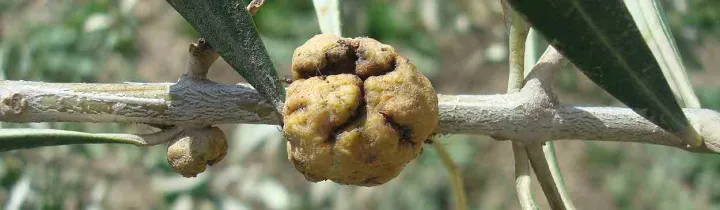
The hallmark symptom of this pathogen is the formation of characteristic irregular, woody outgrowths known as galls or knots on branches, stems, and leaf petioles.
Young knots appear smooth and light-colored, but they eventually turn dark brown or black, becoming rough, corky, and deeply fissured as they age.
Cross-sections of the knots reveal necrotic internal tissue, often accompanied by a distinct odor due to the presence of secondary decomposing organisms.
- Deformation and twisting of shoots and young branches.
- Premature leaf drop and restricted vegetative growth.
- Reduced vigor and stunted appearance of the entire plant.
- Open lesions at the sites of mechanical trauma.
Over time, these galls can merge to form large, tumor-like masses that effectively girdle the branches, leading to their eventual death.
Control measures
Successful management relies heavily on strict sanitation practices, including the removal and destruction of all severely infected branches to reduce inoculum load.
Disinfecting pruning equipment with alcohol or sodium hypochlorite solutions between each tree is mandatory to prevent the human-aided spread of the bacteria.
Pruning activities should be avoided during wet or rainy conditions, as open wounds are extremely susceptible to infection during high-humidity events.
Preventive applications of copper-based bactericides after harvest or following severe weather events help to protect vulnerable tissues from bacterial colonization.
Long-term control strategies focus on the planting of resistant cultivars and maintaining overall orchard health to minimize susceptibility to the disease.
Causes diseases · 2
Discussion
No discussions yet — be the first.