
Description
Symptoms
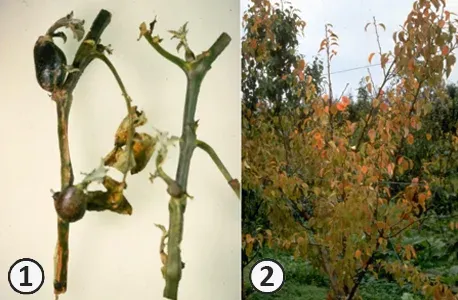
The primary symptom of the disease is a significant reduction in fruit size, with apples becoming stunted, hard, and failing to reach their typical variety flavor.
Affected trees exhibit stunted growth patterns, resulting in shortened internodes and the development of dense, broom-like clusters of twigs often called witch's brooms.
Leaves on infected trees often show abnormal coloration, including chlorotic spots, and may experience premature yellowing and dropping during the growing season.
Fruits affected by this disease are frequently deformed, with leathery skin and fibrous flesh that lacks the juiciness expected of healthy apples.
In advanced stages of infection, the tree stops producing viable fruit altogether, and the canopy gradually thins as terminal shoots begin to die off.
Pathogen
The pathogen responsible for apple small fruit disease is a phytoplasma, which is a specialized type of bacteria that affects the plant's phloem tissue.
Phytoplasmas lack a cell wall and are obligate parasites, meaning they can only survive within the host plant or inside specific insect vectors.
This pathology is primarily spread through the use of infected grafting material, which allows the pathogen to colonize new trees during propagation.
The disease is transmitted between trees by phloem-feeding insects, such as leafhoppers and psyllids, that carry the pathogen from infected to healthy trees.
The pathogen colonizes the sieve tubes of the plant, disrupting the translocation of carbohydrates and nutrients, which ultimately leads to stunted fruit development.
Conditions for development
The spread of the disease is closely tied to the lifecycle and population density of its insect vectors, which are most active during warm, humid conditions.
Environmental stress, such as drought or waterlogging, weakens the tree's physiological defenses, allowing the phytoplasma to colonize the host more efficiently.
Poor orchard management, including the neglect of pest control programs, creates an ideal environment for insect vectors to proliferate and spread the infection.
The pathogen can remain latent in planting material, making the introduction of infected nursery stock the most common way to establish the disease in new areas.
Proximity to alternative host plants and weeds that harbor the phytoplasma further increases the risk of transmission to healthy apple trees.
Why it matters
Apple small fruit disease causes severe economic loss, as the stunted and deformed fruits are of no commercial value and cannot be sold on the fresh market.
Infected trees show reduced winter hardiness, making them significantly more susceptible to frost damage and secondary pathogen attacks during dormant periods.
The systemic nature of the infection leads to the exhaustion of the tree's energy reserves, causing a decline in health that ends in premature tree mortality.
Because there is no cure for phytoplasma infections in orchard settings, the disease necessitates the removal of affected trees to prevent further spread.
Orchards face substantial long-term financial impacts due to the loss of yield and the costs associated with orchard replanting and sanitation efforts.
Protection
The most critical defense strategy is the use of disease-free, certified planting material sourced from reputable nurseries that perform regular diagnostic tests.
Orchard managers must implement strict monitoring to identify and remove infected trees immediately to eliminate the source of inoculum from the environment.
An effective pest control program targeting insect vectors is essential to limit the transmission of the pathogen during the growing season.
Maintaining a clean orchard floor by removing weeds and host plants helps to minimize the population of vectors that can carry the phytoplasma.
- Application of systemic insecticides to control insect vectors.
- Use of certified, disease-free apple tree saplings.
- Prompt removal and destruction of infected symptomatic trees.
- Disinfection of pruning tools to prevent mechanical transmission.
Pathogens and affected parts
Affects crops · 1
Discussion
No discussions yet — be the first.