
Aspergillus
Aspergillus
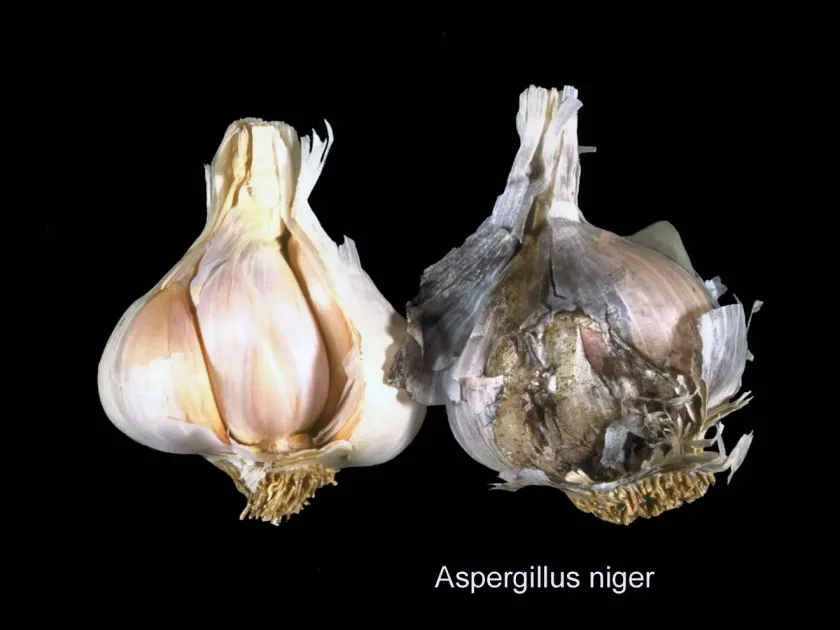
Description
How to identify
Aspergillus is a genus of fungi belonging to the kingdom Fungi, phylum Ascomycota. These are microscopic mold fungi widely distributed in soil, decaying organic matter, and storage facilities.
The genus includes numerous species, most notably Aspergillus flavus and Aspergillus niger. These organisms are saprotrophs but can behave as opportunistic pathogens under favorable conditions.
Reproduction occurs asexually through conidia, which are produced on specific structures called conidiophores, characterized by a bulbous vesicle at the apex.
The fungus is metabolically active, secreting enzymes that degrade organic substrates and producing secondary metabolites, including hazardous mycotoxins like aflatoxins.
Colonies of Aspergillus typically appear as fuzzy or velvety growths, ranging in color from yellow and green to black, depending on the specific species involved.
What it damages
Aspergillus primarily targets seeds, cereal crops, legumes, nuts, and fresh produce during field maturation and, more critically, during post-harvest storage.
Oil-rich seeds such as sunflower, peanut, and soybean are particularly susceptible to infection due to their high fat and protein content, which supports fungal growth.
In field conditions, the fungus infects maize ears, causing Aspergillus ear rot, often following physical damage to the crop by insects or hail.
Post-harvest damage is severe, as the fungus can ruin large stockpiles of agricultural commodities if storage conditions are not strictly managed.
Beyond physical damage, the fungus produces toxins that render the produce unfit for food or animal feed, posing serious health risks to consumers.
When it appears
The fungus thrives in warm environments, particularly when ambient temperatures and substrate moisture levels are elevated.
In fields, the risk of infection peaks during drought periods followed by high humidity, which reduces the plant's natural defense mechanisms.
In storage facilities, outbreaks occur in pockets where grain moisture is high and self-heating occurs, with temperatures rising up to 30–40 degrees Celsius.
Conidia are disseminated via wind, rainfall, contaminated soil, and agricultural machinery, ensuring the fungus is always present in the environment.
Under optimal conditions, the life cycle of Aspergillus can be completed within a few days, leading to rapid contamination of stored produce.
Signs of infestation
The first visual sign is the emergence of a moldy growth on the crop, which turns yellow-green or coal-black as the conidia mature.
In seeds, symptoms include discoloration, loss of germination viability, and a characteristic musty odor resulting from metabolic activity.
On maize ears, the infection manifests as extensive moldy patches on the kernels, frequently associated with tissue rotting and softening.
In industrial settings, laboratory analysis for mycotoxin content is often necessary, as visible symptoms may not always be evident at early stages.
- Darkening of the seed coat
- Characteristic musty odor
- Fuzzy, pigmented fungal colonies
- Reduced flowability of grain
- Development of self-heating grain hot spots
Control measures
The primary control strategy involves drying grain to safe moisture levels immediately after harvest to inhibit fungal development.
Maintaining proper temperature control and utilizing aeration systems in storage bins are essential to prevent moisture condensation.
Field-level management focuses on pest control, as insect injury significantly increases the risk of fungal entry into the grain.
Seed treatment with systemic fungicides is recommended to protect emerging seedlings from soil-borne mold infections during germination.
Implementing effective crop rotation and rigorous sanitation of storage facilities after each season are crucial for reducing the overall pathogen load.
Causes diseases · 4
Discussion
No discussions yet — be the first.