


Prices in stores
from0.31 €per 1 kg
pack from 17.41 € per 1 l
3 offers from 2 stores
Type of Development
Winter wheat
Wheat Type
Soft wheat variety
Awnedness
Awned
Growing Season
260-270 days
Your mark
0 votes
0% positive ratings
Store offers · 3 from 2 stores
3 offers in 2 stores — from 0.31 € per 1 kg.
Available at: Khaskom · Vviagro
Prices are collected automatically from store websites and converted at the current exchange rate. Check the price and availability on the store website before ordering.
Description
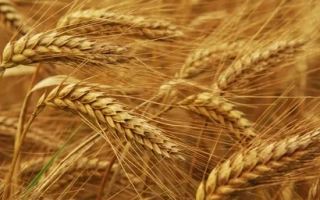
Winter soft wheat variety Magnetka is a high-yielding forest-steppe ecotype intended for cultivation in the Polissia and forest-steppe zones. Registered in 2019, the variety is primarily used for grain production. Its vegetation period ranges from 263 to 275 days, ensuring early heading and maturity. Plants reach a height of 80–90 cm, have strong, hollow stems of medium thickness, and bear long, large ears measuring 12–14 cm in length with white coloration and medium density — approximately 24 spikelets per 10 cm of stem. The ears are not brittle, with short, thin, white awns. The grain of variety Magnetka is large, elongated, egg-shaped, red-colored, and medium-ribbed. The thousand-grain weight varies from 50 to 60 grams. The grain contains high levels of gluten (30–32%) and protein (14–15%), placing it in the group of strong wheats. The gluten deformation index (IDC) is 65 optical units, and flour strength ranges from 300 to 365 astronomical units. These indicators ensure high-quality flour and bread, with a volume of 1150 cm³ per 100 grams of flour and an overall bread quality rating of 9 points. Variety Magnetka exhibits high winter hardiness and resistance to adverse conditions, confirmed by variety trials, where the yield over three years averaged 76.4 centners per hectare — 12.2 centners per hectare higher than the standard variety Shestopalkovka. The maximum yield, recorded in 2013, reached 107 centners per hectare. The recommended seeding rate is 3.5–4.5 million germinating seeds per hectare (160–190 kg), depending on moisture availability and sowing dates. Due to its large ears and grains, as well as strong stems, variety Magnetka is a reliable choice for obtaining high-quality grain and universal-purpose flour.
Crop & resistance
Crop
Disease resistance
Specifications
| Type of Development | |
|---|---|
| Wheat Type | |
| Awnedness | |
| Growing Season | 260-270 days |
| Plant: height | 80-90 cm |
| Seed: mass 1.000 pcs seeds | 50-55 grams |
| Grain: gluten content | More than 30% |
| Potential Yield | 8-9 tons |
| Registration year | 2019 |
| Catalog | Catalog → Wheat |
| Manufacturer | Farmstead 'Bor' |
| Country | Ukraine |
No reviews yet. Be the first to share your experience.
Alternatives
Wheat seeds · similar varieties





See also
Often considered together with this variety



Recently viewed
Products you’ve viewed on this site
Reviews