


SKU #44480
·
41 views
Watermelon New Year
Watermelon
User rating
0 votes0% positive reviews
No ratings yet — be the first.
Beginning of ripening
80-90 days
Fruit; flesh color
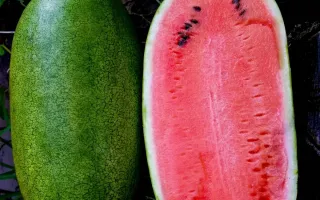
Pink
Fruit; shape
Round
Fruit; weight
5.0-8.0 kg
About product

A mid-early variety with reliable fruit weight and high transportability.
Beginning of ripening
80-90 days
Fruit; flesh color
Pink
Fruit; shape
Round
Fruit; weight
5.0-8.0 kg
Description
Technical profile of the 'Novorichniy' watermelon
The 'Novorichniy' variety, developed by the Institute of Vegetable and Melon Growing of NAAS (Ukraine), is designed for reliable performance in temperate climate zones. With a vegetation period of 80–90 days, it offers a predictable growth cycle that fits well within the main cultivation window, reducing exposure to late-season weather risks.
Physiological characteristics of the fruit
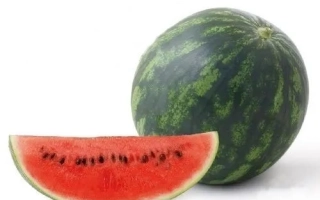
The variety is engineered to produce round fruits with a weight range of 5.0–8.0 kg. This mass profile is strategically chosen to meet retail market demands while ensuring the structural integrity of the fruit during logistics and storage.
- Flesh color: distinctive pink, characterized by a firm texture that enhances shelf life.
- Shape: spherical, which is optimal for uniform distribution of stress during transport.
- Standardization: consistent weight metrics simplify the post-harvest grading and packing process.
Agronomic guidelines
To maximize the crop's yield potential, precise population density is required. The recommended density is 8,000 to 9,000 plants per hectare. This spacing is calculated to prevent resource competition for water and nutrients, ensuring that each plant maintains optimal metabolic activity throughout the development phase.
The 'Novorichniy' watermelon represents a practical choice for producers focusing on a balanced combination of quality, maturation efficiency, and long-distance transportability. The expertise of the Ukrainian Institute of Vegetable and Melon Growing ensures this variety performs consistently under standard commercial protocols.
Crop & resistance
Crop
Specifications hover over for a hint about the specification
|
Beginning of ripening
Beginning of ripening
From germination to flowering, it takes 60 to 140 days depending on the variety. |
80-90 days |
|---|---|
|
Fruit; flesh color
Fruit; flesh color
Color of the fruit flesh. There are red, pink, yellow, and brown colors. |
|
|
Fruit; shape
Fruit; shape
Spherical, oval, flattened or cylindrical shape. |
|
|
Fruit; weight
Fruit; weight
Table watermelons weigh 0.6-16 kg. |
5.0-8.0 kg |
|
Recommended Density
Recommended Density
Optimal productivity is achieved at a planting density of 4000-5500 plants/ha. Possible planting scheme: 300-500x40-80 cm. |
8-9 thousand pcs/ha |
| Registration year | 2004 |
| Catalog | Catalog → Watermelon |
| Legal data |
Show · 1
|
| Country | Ukraine |
Store offers
Prices are updated on loadLoading offers…
Aggregator catalog: prices are collected automatically from store websites, normalized by AI and converted at the current exchange rate. Before ordering, confirm the price and availability on the store's website. This block is not indexed by search engines — the data is loaded after the page opens.
Not yet комментариев. Be the first!
Alternatives
Watermelon seeds · similar varieties





See also
Often considered together with this variety





Recently viewed
Products you’ve viewed on this site
Reviews · 0