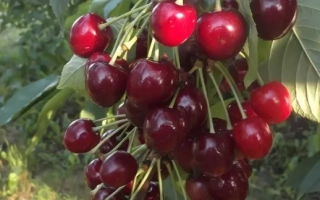
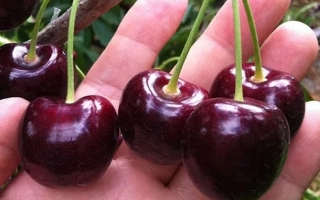
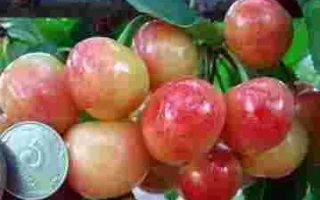
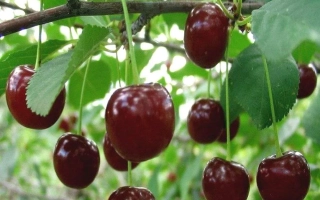
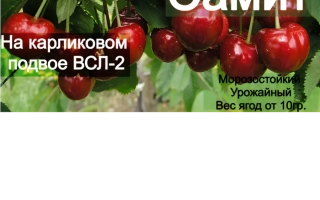
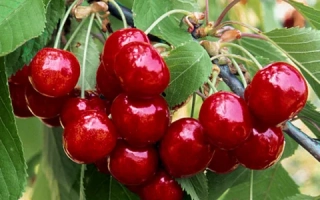
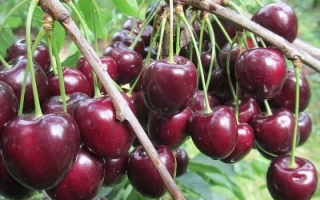
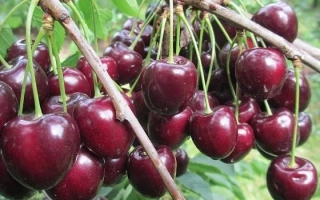
The VSL-2 rootstock is a hybrid obtained by crossing the wild cherry with the Lannuzza cherry. It is intended for use with cherries and plums, demonstrating high compatibility with the main varieties of these crops. Due to its semi-dwarf growth, this rootstock allows forming compact trees, which facilitates care and harvesting. Trees grafted onto the VSL-2 rootstock begin to bear fruit as early as the 3rd-4th year after planting, ensuring regular and stable fruiting throughout the productive period, which lasts 15-18 years.
VSL-2 exhibits high resistance to a range of diseases, including coccomycosis, nematodes, and root cancer. The rootstock adapts well to heavy, waterlogged soils and has a frost-resistant root system capable of withstanding temperatures down to -14 °C. Additionally, it shows drought tolerance and does not produce root suckers, which contributes to better tree anchoring in the soil and reduces the need for additional care. In nurseries, the rootstock propagates well through green and semi-hardwood cuttings, as well as horizontal layering, ensuring high survival rates and development of seedlings with a branched root system.
VSL-2 is recommended for intensive plantations with planting densities of 800 to 1000 trees per hectare, allowing efficient land use and high yields. Despite its high resistance, the rootstock is sensitive to viral infections, which requires careful monitoring in nurseries to prevent spread and poor graft survival. Overall, VSL-2 is a reliable and productive choice for gardeners aiming to create sustainable and high-yielding cherry and plum orchards.