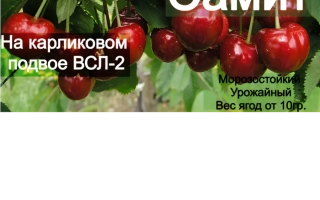
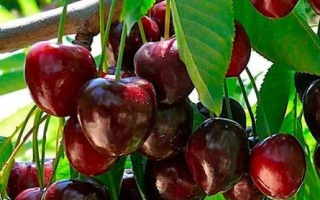
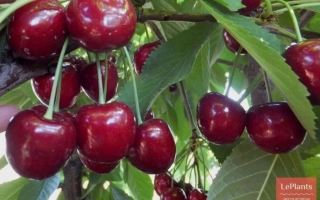
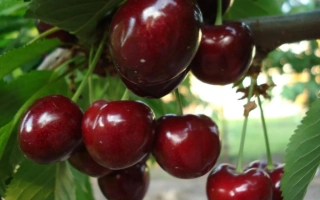
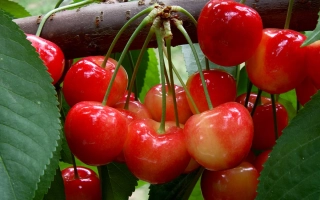
The VSL-2 rootstock is a semi-dwarf rootstock specifically developed for cherry and plum, obtained by hybridizing wild cherry with the Lannuzi cherry. It is distinguished by high compatibility with major cultivars of these stone fruits, allowing the formation of compact trees with round, dense crowns and medium growth. Thanks to its characteristics, trees grafted onto this rootstock begin to bear fruit as early as the 3rd-4th year after planting, demonstrating regular and stable fruiting throughout the productive period, which lasts 15-18 years.
VSL-2 has high frost resistance of the root system, tolerating temperatures down to -14 °C, and is resistant to diseases such as coccomyces, nematodes, and root cancer. The rootstock grows well on heavy and waterlogged soils, is drought-tolerant, and does not produce suckers, which contributes to good tree anchoring in the soil. Seedlings grafted on this rootstock have a well-developed, branched root system and successfully establish themselves through green and semi-hardwood cuttings, as well as horizontal layering.
VSL-2 is recommended for intensive plantations with planting density of 800-1000 trees per hectare, enabling efficient land use and early, stable yields. Trees grafted on this rootstock exhibit reduced growth vigor by 40-60% compared to those grafted onto wild cherry and Antipku, which simplifies maintenance and harvesting. Plums grown on the VSL-2 rootstock produce large, sweet fruits resistant to cracking, making this rootstock an excellent choice for cultivation in Steppe and Forest-Steppe zones.