


SKU #51549
·
63 views
KUBANSKIE KAZAKI
Tomato
User rating
0 votes0% positive reviews
No ratings yet — be the first.
Product Type
Seeds; Seed material
Plant Type
Determinant
Maturation Period
90-100 days
Fruit Weight
40-60 grams, 80-100 grams
About product

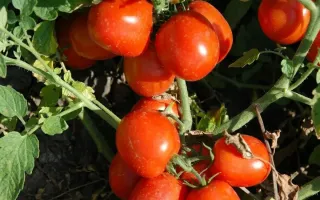
The tomato 'Kubanskie Kazaki' is a medium-maturing variety developed by the Federal Research Center for Vegetable Growing, the agrofirm POISK, and Kuban State Agrarian University. The plant is determinate, medium-height, reaching 65-70 cm, with normal green medium-sized leaves. The inflorescences are intermediate type, bearing 7-10 fruits each, which have an inverted egg-shaped, oval form, smooth…
Product Type
Seeds; Seed material
Plant Type
Determinant
Maturation Period
90-100 days
Fruit Weight
40-60 grams, 80-100 grams
Description
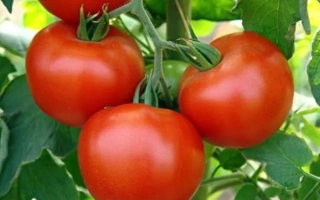
The tomato 'Kubanskie Kazaki' is a medium-maturing variety developed by the Federal Research Center for Vegetable Growing, the agrofirm POISK, and Kuban State Agrarian University. The plant is determinate, medium-height, reaching 65-70 cm, with normal green medium-sized leaves. The inflorescences are intermediate type, bearing 7-10 fruits each, which have an inverted egg-shaped, oval form, smooth and dense surface. Fruit weight varies from 50-55 g to 100-150 g, mature fruits are red, uniform, and immature ones are light green. The fruits are characterized by resistance to cracking, containing 7.0-7.15% dry matter, 3.20-3.30% total sugar, acidity of 0.35-0.37%, and vitamin C in the amount of 17.3-18.1 mg%.
The variety exhibits uniform fruit ripening and high transportability, making it suitable for mechanized harvesting. The vegetative period from seedlings to fruit ripening is 95-105 days. The tomato is warm-loving, grown by seedling or direct sowing in open ground. For seedlings, seeds are sown at the beginning of March in nutrient pots, and transplanting to the permanent location is carried out in the second decade of May with row spacing of 50x50 cm. To accelerate growth and increase yield, temporary film covering is recommended in the first days after planting. Best preceding crops for this variety are legumes, cucurbits, root crops, and leafy vegetables, while planting after potatoes, peppers, eggplants, and watermelon is undesirable. Loamy soils enriched with organic fertilizers are preferred, and the planting site should be sunny and protected from cold winds.
Thus, the tomato 'Kubanskie Kazaki' is a versatile variety suitable for both fresh consumption and processing, such as tomato paste. Its medium-height plant and compact fruits are convenient for cultivation in open ground, while high fruit resistance to cracking and transportability ensure the preservation of the harvest during transport and storage.
The variety exhibits uniform fruit ripening and high transportability, making it suitable for mechanized harvesting. The vegetative period from seedlings to fruit ripening is 95-105 days. The tomato is warm-loving, grown by seedling or direct sowing in open ground. For seedlings, seeds are sown at the beginning of March in nutrient pots, and transplanting to the permanent location is carried out in the second decade of May with row spacing of 50x50 cm. To accelerate growth and increase yield, temporary film covering is recommended in the first days after planting. Best preceding crops for this variety are legumes, cucurbits, root crops, and leafy vegetables, while planting after potatoes, peppers, eggplants, and watermelon is undesirable. Loamy soils enriched with organic fertilizers are preferred, and the planting site should be sunny and protected from cold winds.
Thus, the tomato 'Kubanskie Kazaki' is a versatile variety suitable for both fresh consumption and processing, such as tomato paste. Its medium-height plant and compact fruits are convenient for cultivation in open ground, while high fruit resistance to cracking and transportability ensure the preservation of the harvest during transport and storage.
Crop & resistance
Crop
Specifications hover over for a hint about the specification
| Product Type | |
|---|---|
| Plant Type | |
|
Maturation Period
Maturation Period
Vegetation period from emergence to technical maturity 30-50 days. |
90-100 days |
|
Fruit Weight
Fruit Weight
Tomato fruits are classified by weight as: very small — less than 20 grams; small — 20 — 50 grams; medium — 50 — 100 grams; large — 100 — 200 grams; very large — more than 200 grams. |
40-60 grams, 80-100 grams |
|
Fruit Color
Fruit Color
The fruit color of tomato varieties is influenced by the combination of skin and flesh color. Some varieties have transparent skin, others — yellow. When combined differently, the fruits can acquire quite diverse colors. The fruit color is affected by pigments (lycopene) and thei... |
|
|
Dry Matter Content
Dry Matter Content
The amount of dry matter in tomato fruits, measured in percentages. |
6,50-7,00% |
| Transportability | |
| Registration year | 2010 |
| Catalog | Catalog → Tomato |
| Legal data |
Show · 18
|
| Country | Russia |
Store offers
Prices are updated on loadLoading offers…
Aggregator catalog: prices are collected automatically from store websites, normalized by AI and converted at the current exchange rate. Before ordering, confirm the price and availability on the store's website. This block is not indexed by search engines — the data is loaded after the page opens.
Not yet комментариев. Be the first!
Alternatives
Tomato seeds · similar varieties





See also
Often considered together with this variety






Recently viewed
Products you’ve viewed on this site
Reviews · 0