


SKU #43485
·
45 views
Sugar beet Jagienka
Sugar Beet
KHBC Sp. z o.o.User rating
0 votes0% positive reviews
No ratings yet — be the first.
Root; shape
Oval-conical
Sugar Content
18-19%
Registration year
2024
About product

A reliable balance of high sugar content and enhanced resistance to Cercospora from Polish breeders.
Root; shape
Oval-conical
Sugar Content
18-19%
Registration year
2024
Description
Yield stability with "Yagenka"
Sugar beet "Yagenka" from the Polish breeding company KHBC Sp. z o.o. is a solution for farms that prioritize the balance between sugar content and phytosanitary safety. In the context of modern agro-ecosystems, where pathogens are becoming increasingly aggressive, selecting a variety with accentuated resistance to Cercospora is an economic necessity.
Agronomic potential and specifications
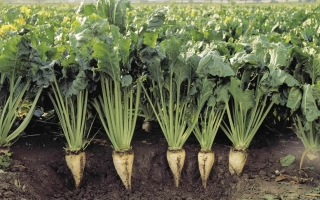
- Root type: The oval-conical shape facilitates mechanized harvesting, ensuring minimal losses during lifting.
- Sugar content: The 18–19% metric remains stable even with moderate agronomic inputs, making this hybrid predictable for processing plants.
- Phytosanitary barrier: The main competitive advantage of "Yagenka" is its genetic tolerance to Cercospora. This allows agronomists to reduce the number of fungicide applications, lowering production costs without compromising foliage health.
"Yagenka" demonstrates reliability in the field. Unlike ultra-intensive hybrids that require ideal conditions, this KHBC variety shows enviable plasticity. It is optimal for farms aiming for a high sugar yield per hectare without turning the field into a site for continuous chemical warfare. The hybrid's strength lies in preserving root crop quality until the harvest, which is critical for staggered harvesting schedules.
Who is this choice for?
This variety serves as a robust tool for agronomists who value a rational approach to plant protection. If your strategy is to invest in genetics capable of resisting fungal threats independently, "Yagenka" will meet your expectations. It does not require overly complex care technologies while ensuring high sugar extraction rates and excellent storability of the roots.
Crop & resistance
Crop
Disease resistance
Specifications hover over for a hint about the specification
|
Root; shape
Root; shape
Roots can be round, elongated-round, cylindrical, conical. |
|
|---|---|
| Sugar Content | 18-19% |
| Registration year | 2024 |
| Catalog | Catalog → Sugar Beet |
| Manufacturer | KHBC Sp. z o.o. |
| Country | Poland |
Store offers
Prices are updated on loadLoading offers…
Aggregator catalog: prices are collected automatically from store websites, normalized by AI and converted at the current exchange rate. Before ordering, confirm the price and availability on the store's website. This block is not indexed by search engines — the data is loaded after the page opens.
Not yet комментариев. Be the first!
Alternatives
Sugar beet seeds · similar varieties





See also
Often considered together with this variety





Recently viewed
Products you’ve viewed on this site
Reviews · 0