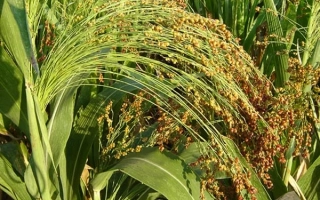
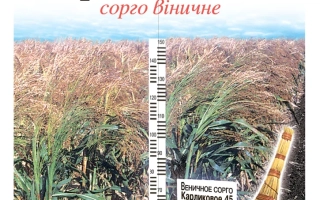
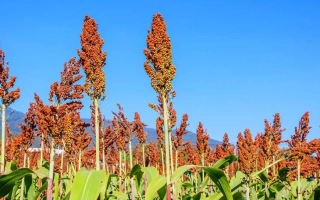
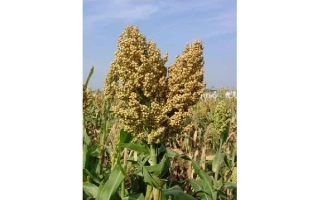
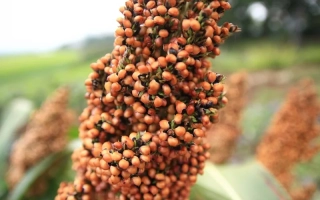
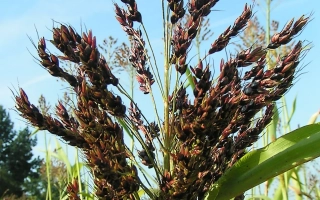
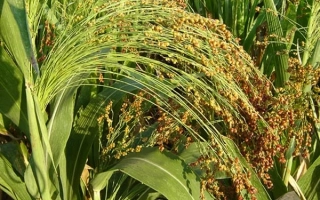
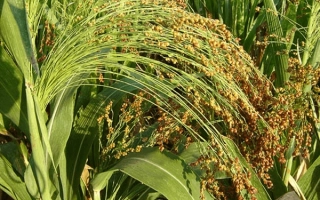
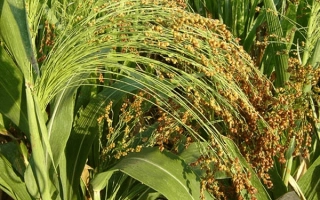
Sorghum bicolor (Sorghum bicolor) is an annual herbaceous plant belonging to the grass family, primarily cultivated for obtaining stalks used in the production of brooms and other household items. The plant is characterized by a strong root system penetrating to a depth of 2–2.5 meters, an upright stem reaching 0.5 to 3 meters in height, and long linear-lanceolate leaves. The inflorescence is a panicle up to 50–90 cm long, composed of small bisexual flowers pollinated by wind. Sorghum is heat-loving, light-loving, and drought-tolerant, preferring fertile soils and requiring timely care, including loosening, weeding, and fertilization. Sowing is carried out in spring at soil temperatures of 10–12°C, and harvesting occurs at the full maturity stage of the panicles.
Sorghum for broom production, including varieties such as Vavigen 100, Broom 623, Early Broom, and Vincher, is distinguished by high yield and good agronomic characteristics. These varieties are widely used in agriculture to obtain high-quality raw material for manufacturing brooms and other household products.
Finished brooms made from broom sorghum are dense, natural-colored items intended for cleaning indoor and adjacent areas. They are convenient for sweeping floors in household settings and are characterized by durability and longevity. The dimensions of such brooms typically measure around 74 by 35 cm, ensuring ease of use. Production of brooms from sorghum takes place in Ukraine, guaranteeing quality and compliance with agronomic standards.