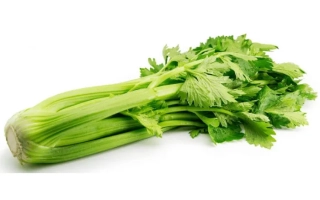
Kelvin Celery (Kelvin) is a medium-early hybrid of celery developed by the Dutch company Rijk Zwaan. This variety has a long growing period — about 140 days from sowing to full maturity. Seedlings are planted in warmed, loose, fertile soil with neutral pH, providing optimal conditions for growth. Kelvin prefers regular and abundant watering to keep the soil consistently moist, and requires several feedings during the season, soil loosening after watering, and timely weed and pest control. The plant does not tolerate dense planting, as it forms about ten large stalks in the rosette, so optimal planting density is 8-10 plants per square meter. Kelvin celery forms uniform, smooth, and long stalks of deep green color with slight indentations and high leaf attachment. The stalks have a pleasant sweet taste and crisp texture, making them ideal for fresh consumption and culinary use. Due to the absence of fibrous inclusions and uniform structure, celery is suitable for selling whole plants and slicing into snacks. Additionally, the variety shows high resistance to bolting and fungal diseases such as septoria, ensuring good transportability and long-term storage of the harvest. Growing Kelvin celery requires adherence to specific agronomic practices. Seeds can be sown directly into open ground under favorable weather conditions or as seedlings followed by transplanting into warmed soil. To retain moisture after transplanting, mulching the soil with peat or sawdust is recommended. Throughout the season, fertilization is important, beginning with nitrogenous fertilizers and transitioning to superphosphates in later growth stages. Regular care, including loosening, root watering, and weed removal, contributes to forming a high-quality harvest. Thanks to moderate growth vigor and vertical stem placement, harvesting Kelvin celery is easy and efficient, making this variety popular for both fresh markets and processing.