


SKU #73514
·
68 views
ALASNY
Wildrye
User rating
0 votes0% positive reviews
No ratings yet — be the first.
Assignment
Feed
Usage Type
Hay, Pasture
Registration year
1999
About product

Siberian bristlegrass «Alasny» is a highly productive cereal plant of the grass family, widely used as a fodder crop in arid and saline soil conditions. The crop is characterized by high winter hardiness, drought and salt resistance, as well as the ability to maintain productivity for 5–10 years with proper care.Externally, bristlegrass appears as an erect bush with a closed base, segmented hollow…
Assignment
Feed
Usage Type
Hay, Pasture
Registration year
1999
Description
Siberian bristlegrass «Alasny» is a highly productive cereal plant of the grass family, widely used as a fodder crop in arid and saline soil conditions. The crop is characterized by high winter hardiness, drought and salt resistance, as well as the ability to maintain productivity for 5–10 years with proper care.
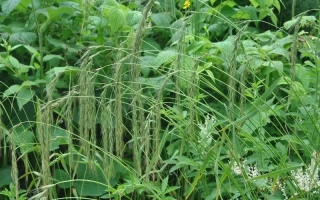
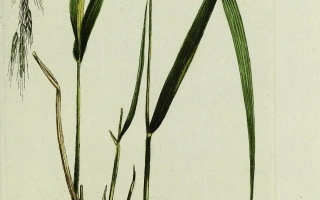
Externally, bristlegrass appears as an erect bush with a closed base, segmented hollow stems up to 70–100 cm high. Leaves are thin, stiff, and rough, light gray-green in color, 25–50 cm long. The inflorescence is a bristly spikelet 12–20 cm long with a bristle 1.5–2.5 cm; the fruit is a grain, with 1000 seeds weighing 2.5–3.0 g.
The fodder quality of bristlegrass is high: in 100 kg of hay, there are about 61 kg of feed units and 9.2 kg of digestible protein. In green grass, the indicators are 28.7 kg of feed units and 5.5 kg of protein. Due to these characteristics, the plant is suitable for creating meadows and pastures in steppe and forest-steppe regions.
For sowing «Alasny», it is recommended to use a pure variety at a rate of 25 kg/ha (broadcast) or 20 kg/ha (row). In grass mixtures, the rate is reduced to 8–12 kg/ha if the plant is the only grass, and to 5–7 kg/ha in the presence of other varieties. Seeds germinate at a temperature of +4–6 °C.
Bristlegrass «Alasny» is grown in combination with alfalfa or melilot, which increases the overall productivity of pastures and ensures resistance to adverse climatic conditions. This makes it a valuable resource for farmers working on arid lands, where a reliable source of fodder mass is needed in early spring and late autumn periods.
Externally, bristlegrass appears as an erect bush with a closed base, segmented hollow stems up to 70–100 cm high. Leaves are thin, stiff, and rough, light gray-green in color, 25–50 cm long. The inflorescence is a bristly spikelet 12–20 cm long with a bristle 1.5–2.5 cm; the fruit is a grain, with 1000 seeds weighing 2.5–3.0 g.
The fodder quality of bristlegrass is high: in 100 kg of hay, there are about 61 kg of feed units and 9.2 kg of digestible protein. In green grass, the indicators are 28.7 kg of feed units and 5.5 kg of protein. Due to these characteristics, the plant is suitable for creating meadows and pastures in steppe and forest-steppe regions.
For sowing «Alasny», it is recommended to use a pure variety at a rate of 25 kg/ha (broadcast) or 20 kg/ha (row). In grass mixtures, the rate is reduced to 8–12 kg/ha if the plant is the only grass, and to 5–7 kg/ha in the presence of other varieties. Seeds germinate at a temperature of +4–6 °C.
Bristlegrass «Alasny» is grown in combination with alfalfa or melilot, which increases the overall productivity of pastures and ensures resistance to adverse climatic conditions. This makes it a valuable resource for farmers working on arid lands, where a reliable source of fodder mass is needed in early spring and late autumn periods.
Specifications
| Assignment | |
|---|---|
| Usage Type | |
| Registration year | 1999 |
| Catalog | Catalog → Wildrye |
| Legal data |
Show · 4
|
| Country | Russia |
Store offers
Prices are updated on loadLoading offers…
Aggregator catalog: prices are collected automatically from store websites, normalized by AI and converted at the current exchange rate. Before ordering, confirm the price and availability on the store's website. This block is not indexed by search engines — the data is loaded after the page opens.
Not yet комментариев. Be the first!





See also
Often considered together with this variety



Recently viewed
Products you’ve viewed on this site
Reviews · 0