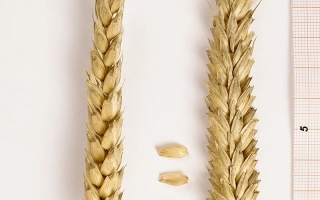
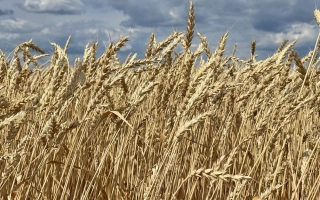
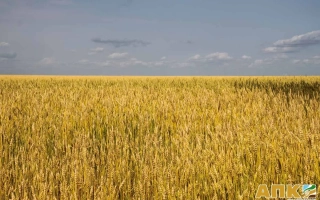
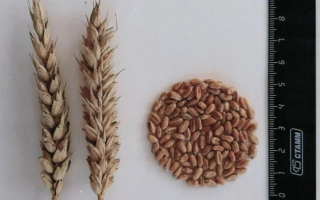
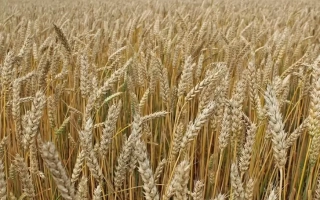
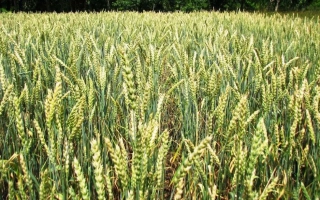
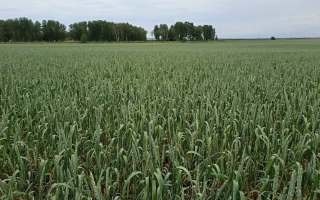
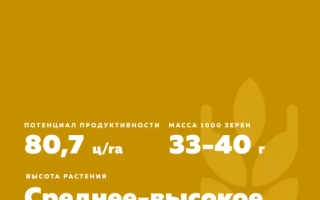
The spring soft wheat variety 'Tinger' is a high-yielding crop with high drought resistance and stable yield. Plants reach a height of 80-100 cm, have an erect bush, and a pyramidal, loose white spike with short awn-like branches. The grain is large, with 1000-grain mass varying from 36 to 50 grams, gluten content of 25-28%, and natural density of 780-820 g/l, ensuring high-quality flour and bread corresponding to GOST 245-50.
The variety belongs to medium-early types with a vegetation period of 75-87 days, maturing simultaneously or slightly later than the Omskaya 36 variety. It possesses high resistance to lodging and drought, exceeding many standards in these indicators. Additionally, 'Tinger' is distinguished by resistance to brown and stem rust, medium resistance to powdery mildew, and susceptibility to powdery bunt, which requires attention during agronomic activities.
The variety's origin is linked to multiple individual selections from a hybrid population involving 'Raduga' and 'Ingala' varieties, which ensured its adaptation to the conditions of the Ural and West-Siberian regions. The variety is recommended for cultivation in various regions of Russia and Kazakhstan, including Tyumen, Novosibirsk, Tomsk, Kemerovo, Omsk, Kurgan, Chelyabinsk, and Orenburg regions, Bashkortostan, Altai Krai, as well as Akmola, North Kazakhstan, East Kazakhstan, Pavlodar, and Kostanai regions of Kazakhstan.